This creamy artichoke pasta combines gluten-free sorghum spaghetti with a creamy dairy-free sauce made with roasted artichoke hearts, walnuts, garlic, hemp milk, lemon zest, and extra virgin olive oil. The sauce is light yet satisfying, with plenty of flavor and nutrients from whole-food ingredients.
Unlike many creamy pasta sauces made with butter, cream, or cheese, this artichoke pasta sauce gets its richness from vegetables, walnuts, and olive oil. Artichokes and walnuts also contribute fiber and nutrients, making this a nourishing way to enjoy a comforting bowl of pasta.
I originally made this recipe with organic sorghum spaghetti, which is both gluten-free and lectin-free. However, the creamy artichoke sauce will work with almost any pasta you enjoy. Use another gluten-free pasta, a lectin-free pasta, or regular pasta if that suits your diet.
A creamy dairy-free pasta sauce made with artichokes
I created this sauce when I wanted something creamy but not heavy. I had recently found frozen artichokes at a local supermarket and paired them with Romanian walnuts, roasted garlic, hemp milk, lemon zest, and extra virgin olive oil.
The artichokes and garlic are roasted first with oregano, basil, salt, pepper, and olive oil. Roasting concentrates their flavor and gives the sauce more depth. Once blended with soaked walnuts and hemp milk, they create a smooth, velvety sauce without any dairy.
Homemade hemp milk works especially well because it has a mild flavor and creamy consistency, but unsweetened almond milk can be used instead. Begin with one cup and add more only as needed—the exact amount will depend on the consistency you prefer.
Testing the sorghum spaghetti
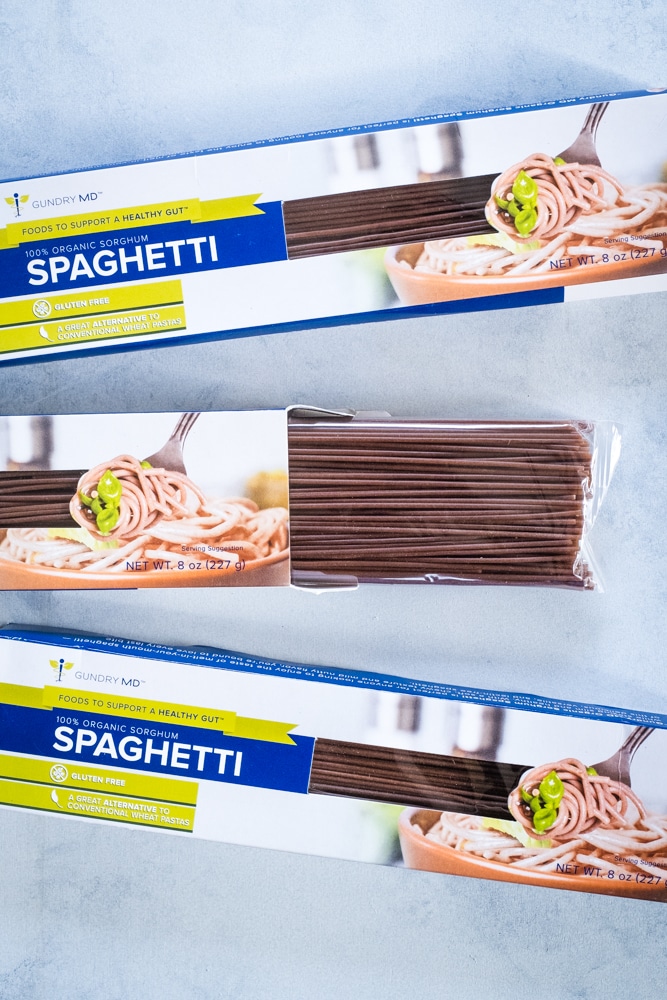
Gluten-free and lectin-free pasta can sometimes be tricky to cook. Some varieties quickly become soft or mushy, and several of the gluten-free pastas I’ve bought in Europe need no more than three minutes of boiling.
I was pleasantly surprised by how well the Gundry MD Organic Sorghum Spaghetti held its shape. It behaved much like whole-wheat spaghetti, and my mom even said it tasted like regular pasta.
The package recommends cooking it for 7 to 12 minutes. I tested it every minute after the seven-minute mark, but the center still tasted hard until it reached 12 minutes. Cooking times can vary, so start checking the pasta early and use the texture you prefer as your guide.
One package made four satisfying servings. This is also the kind of pasta that tastes good with nothing more than extra virgin olive oil, fresh basil, salt, and pepper.
What other pasta can I use?
The artichoke sauce is versatile and doesn’t have to be paired with sorghum spaghetti. You can use:
- Another shape or brand of sorghum pasta
- Your preferred gluten-free spaghetti or short pasta
- Another Plant Paradox-compliant or lectin-free pasta
- Regular pasta if you don’t need the dish to be gluten-free
Spaghetti and fettuccine work especially well because the creamy sauce coats the strands, but short shapes such as penne, fusilli, or rigatoni will also hold the sauce nicely.
Cook the pasta according to the directions on its package rather than using the timing given for the sorghum spaghetti. Before draining, reserve a little pasta water to help loosen the sauce and bring everything together.
How to make creamy artichoke pasta
Begin by soaking the walnuts in cold water for a few hours. This softens them and helps create a smoother sauce.
Roast the frozen artichokes and whole, unpeeled garlic cloves with dried oregano, basil, olive oil, salt, and pepper. Once tender, blend the artichokes with the peeled roasted garlic, soaked walnuts, lemon zest, extra virgin olive oil, and hemp milk.
Warm the sauce gently in a skillet while the pasta cooks. Add the cooked pasta and a few tablespoons of pasta water, then toss until every strand is coated. Finish with fresh parsley, freshly ground black pepper, and an extra drizzle of olive oil.
You may also like
For more lectin-free spaghetti and pasta recipes be sure to try:
- Bolognese Sauce Without Tomatoes (Veggie Loaded, Lectin-Light)
- Homemade Green Gnocchi with Arugula and Cassava Flour
- Grain-Free Fettuccine Carbonara
If you want to explore sorghum and its potential further, make sure to read our article How to cook sorghum; A comprehensive guide.
If you are looking for more dairy-free sauce ideas, check out this Dairy-Free Ranch Dressing recipe.
*This post contains affiliate links, which means I get a small commission if you choose to purchase something via one of my links, at no extra cost to you.
Print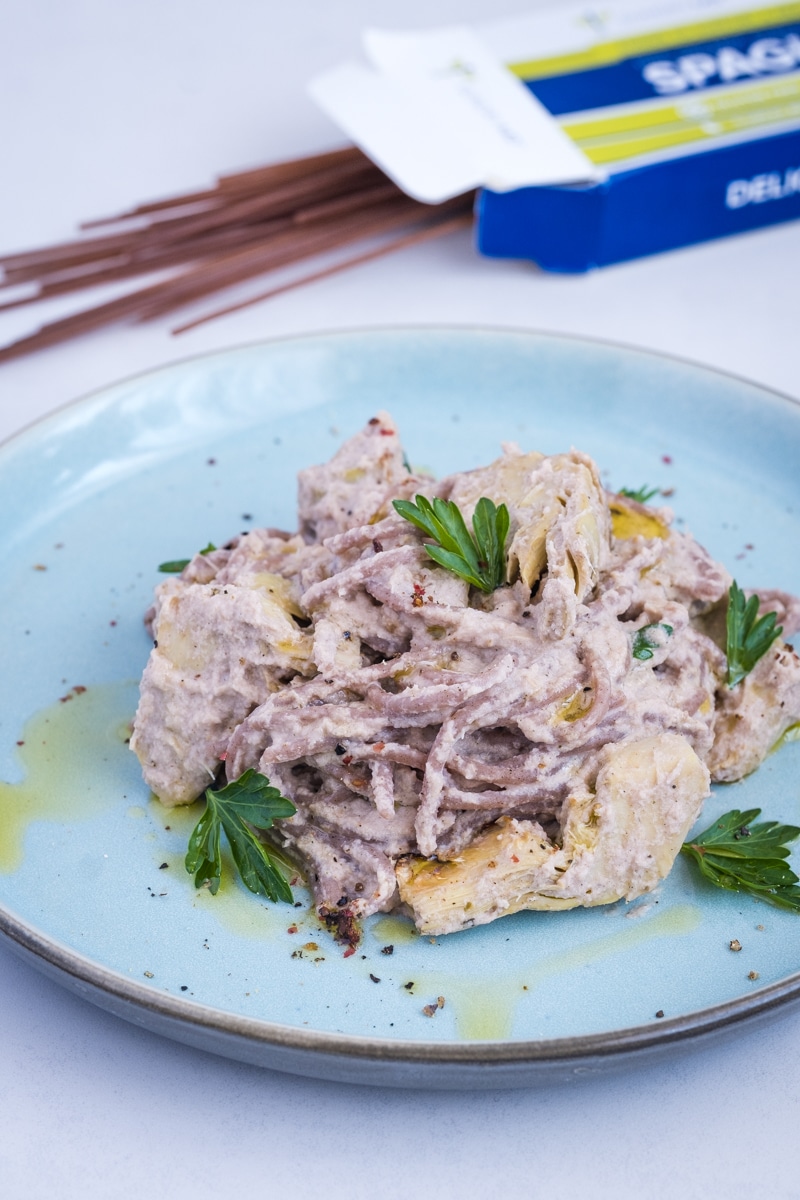
Creamy Artichoke Pasta with Sorghum Spaghetti
- Prep Time: 20 minutes
- Cook Time: 35 minutes
- Total Time: 55 minutes
- Yield: 4 servings
- Category: Dinner
- Method: Stovetop
- Cuisine: Mediterranean
- Diet: Dairy-Free, Gluten-Free, Vegan
Description
This creamy artichoke pasta combines gluten-free sorghum spaghetti with a creamy dairy-free sauce made with roasted artichoke hearts, walnuts, garlic, hemp milk, lemon zest, and extra virgin olive oil. The sauce is light yet satisfying, with plenty of flavor and nutrients from whole-food ingredients.
Ingredients
For roasting the artichokes
- 1 pound (450 grams) frozen artichokes
- 4 garlic cloves, whole and unpeeled
- 1/2 teaspoon dried oregano
- 1/2 teaspoon dried basil
- 1/2 teaspoon salt
- 1/4 teaspoon freshly ground black pepper
- 1 tablespoon extra virgin olive oil
For the creamy artichoke sauce
- The roasted artichokes, reserving a few for garnish if desired
- The 4 roasted garlic cloves, peeled
- 3 tablespoons extra virgin olive oil
- 1/4 cup walnuts, soaked in cold water for a few hours and drained
- Zest of 1 organic lemon
- 1 to 1 1/2 cups unsweetened hemp milk, or unsweetened almond milk
- Salt and freshly ground black pepper, to taste
For the pasta
- 4 servings sorghum spaghetti, or another pasta of choice
- 1 teaspoon salt, for the pasta water
- Fresh parsley or basil, for serving
- Extra virgin olive oil, for serving
Instructions
- A few hours before preparing the pasta, soak the walnuts in cold water. Drain them before making the sauce.
- Preheat the oven to 400°F (200°C).
- Add the frozen artichokes and whole, unpeeled garlic cloves to a baking sheet. Add the oregano, basil, salt, pepper, and 1 tablespoon of olive oil, and toss well to coat.
- Roast the artichokes and garlic for 15 to 20 minutes, or until the artichokes are tender.
- Meanwhile, bring a large pot of water to a boil for the pasta.
- Transfer the roasted artichokes to a blender, reserving a few pieces for garnish if desired. Peel the roasted garlic cloves and add them to the blender.
- Add the 3 tablespoons of olive oil, drained walnuts, lemon zest, and 1 cup of hemp milk. Blend until smooth and creamy. If the sauce is too thick, gradually add more hemp milk until it reaches your preferred consistency. Taste and adjust with salt and pepper.
- Add the salt and spaghetti to the boiling water. Cook according to the directions on the package. The sorghum spaghetti used for the original recipe required 12 minutes.
- Before draining the pasta, reserve some of the cooking water. Warm the artichoke sauce gently in a large skillet.
- Add the cooked pasta to the skillet along with a few tablespoons of pasta water. Toss until the pasta is evenly coated and the sauce has the desired consistency.
- Serve with fresh parsley or basil, freshly ground black pepper, the reserved roasted artichokes, and a drizzle of extra virgin olive oil.
Notes
The sauce works with sorghum spaghetti, another gluten-free or lectin-free pasta, or regular pasta. Pasta cooking times vary considerably, especially among gluten-free varieties. Follow the package directions and begin checking the pasta early.
Use plain, unsweetened hemp or almond milk without vanilla or added sugar.
Add the plant milk gradually. You may not need the full 1 1/2 cups.
4 Comments
Rosemin
June 12, 2024 at 8:52 amHi Claudia so grateful for your wonderful website
Can this be done with canned artichoke ?
Claudia
June 12, 2024 at 3:49 pmHi Rosemin! Yes you can. Maybe you don’t even need to cook them. It won’t be the exact same thing, but I don’t see why it wouldn’t work. -Claudia
Annette
November 10, 2023 at 10:52 amHello Claudia! Thank-you so much for your Website and all the wonderful information and the authentic sharing. Your work is very helpful on the low lectin, low histamine journey. I have a few questions about soaking the walnuts. Does this reduce the histamines? You use cold water? And for how long? I love roasted and spiced walnuts as a snack or as added protein, flavour and texture in dishes… have you ever tried soaking them and then roasting them? I wonder if that would work…
Claudia
November 12, 2023 at 3:36 amHi Annette, thank you for the kind words! I have to say I don’t often soak nuts, even though I know it would be better. Soaking reduces anti-nutrients like phytates, but I don’t think histamines can be reduced in any way (I don’t know of any existing studies mentioning this for histamines). Roasting also reduces phytates, so you can do either, or. Soaking a good practice in general, but I find that roasting after soaking doesn’t give good results. A dehydrator would be better. I hope this helps xx -Claudia