

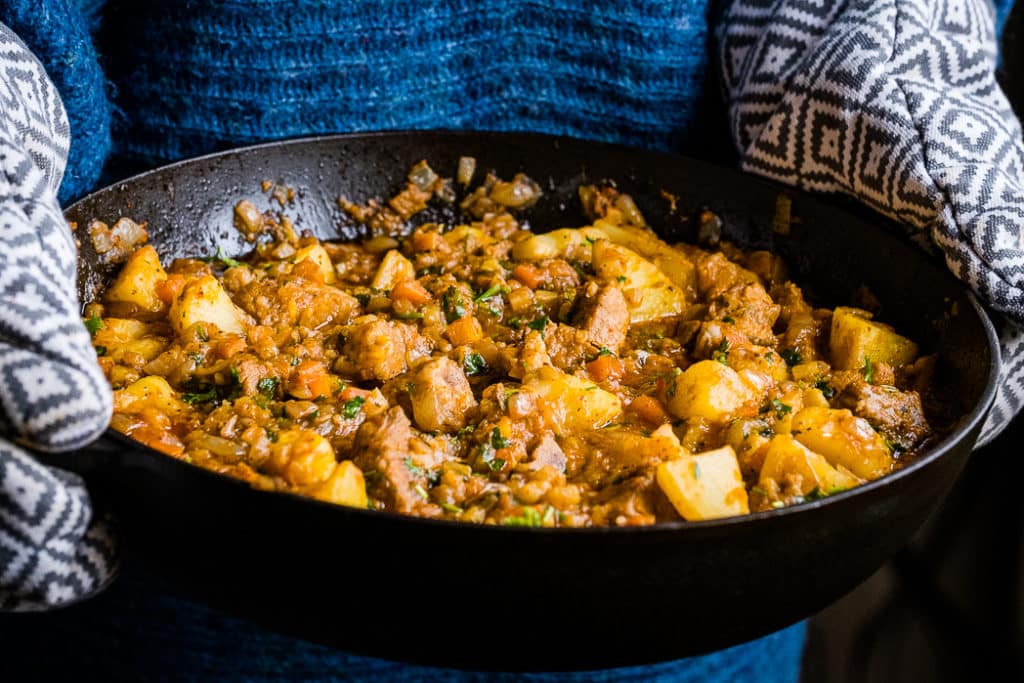
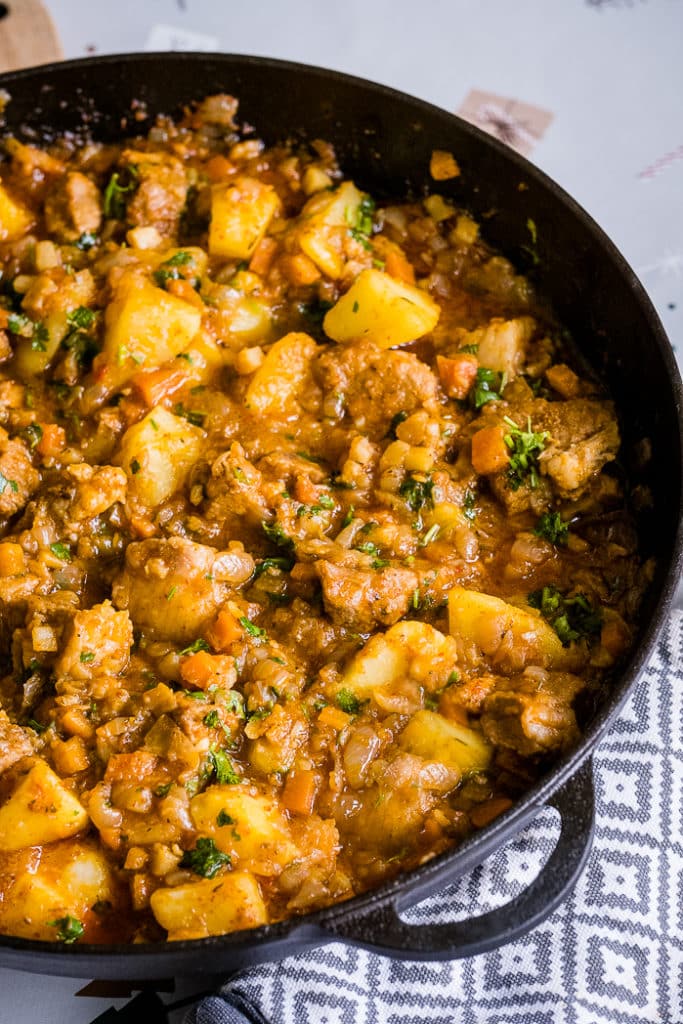
This pork paprikash is a rich, paprika-forward stew made with tender pork, lots of slowly cooked onions, root vegetables, herbs, and potatoes. Inspired by the beloved Hungarian paprikash and the comforting stews I grew up eating in Romania, this tomato-free version develops its deep flavor and beautiful color without tomato sauce. It is also naturally gluten-free and dairy-free.
A pork paprikash with Romanian roots
Paprikash is a beloved Hungarian dish, but it is also part of the culinary landscape in Transylvania and other parts of Romania. My version is not strictly traditional — it sits somewhere between Hungarian pork paprikash and the hearty Romanian stews I grew up with.
The defining ingredient is paprika, which gives the stew its warm flavor and deep red color. From Romanian cooking, I borrowed one of my mother’s most reliable rules: when making stew, don’t be shy with the onions.
This recipe begins with seven medium onions (yes, seven! 😃 ), slowly softened until sweet, silky, and fragrant. As the stew cooks, they melt into the liquid and create a rich sauce without flour, dairy, or tomatoes.
Choose a good-quality paprika
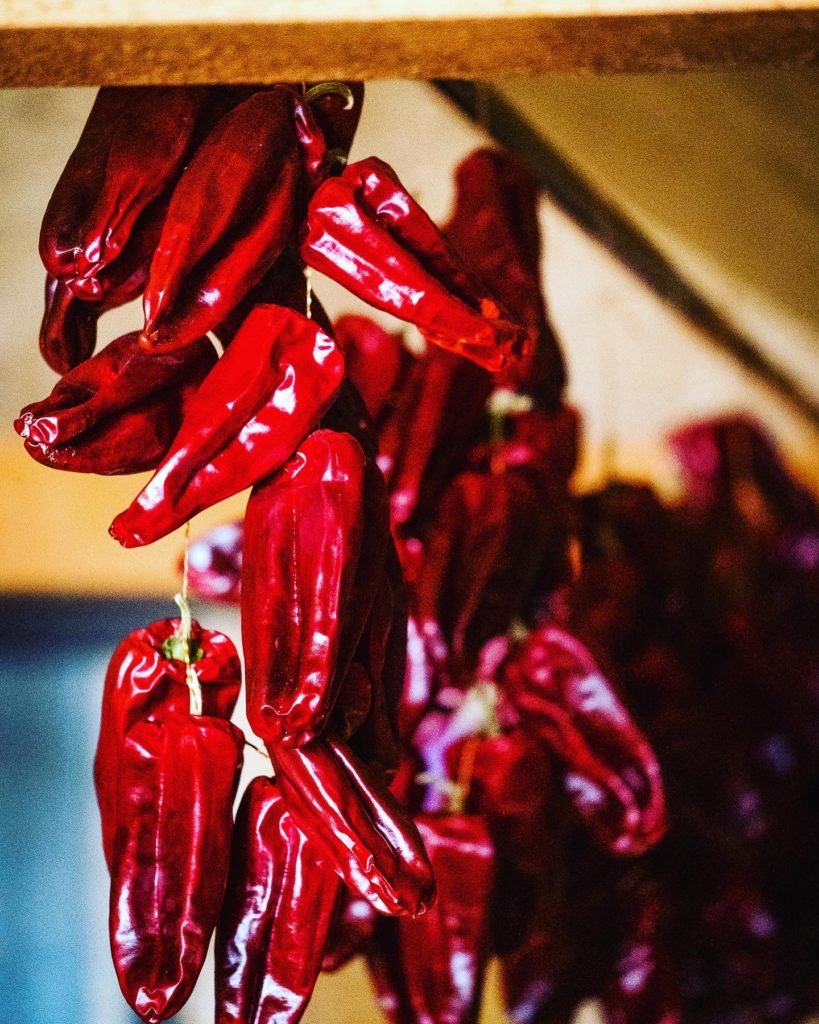
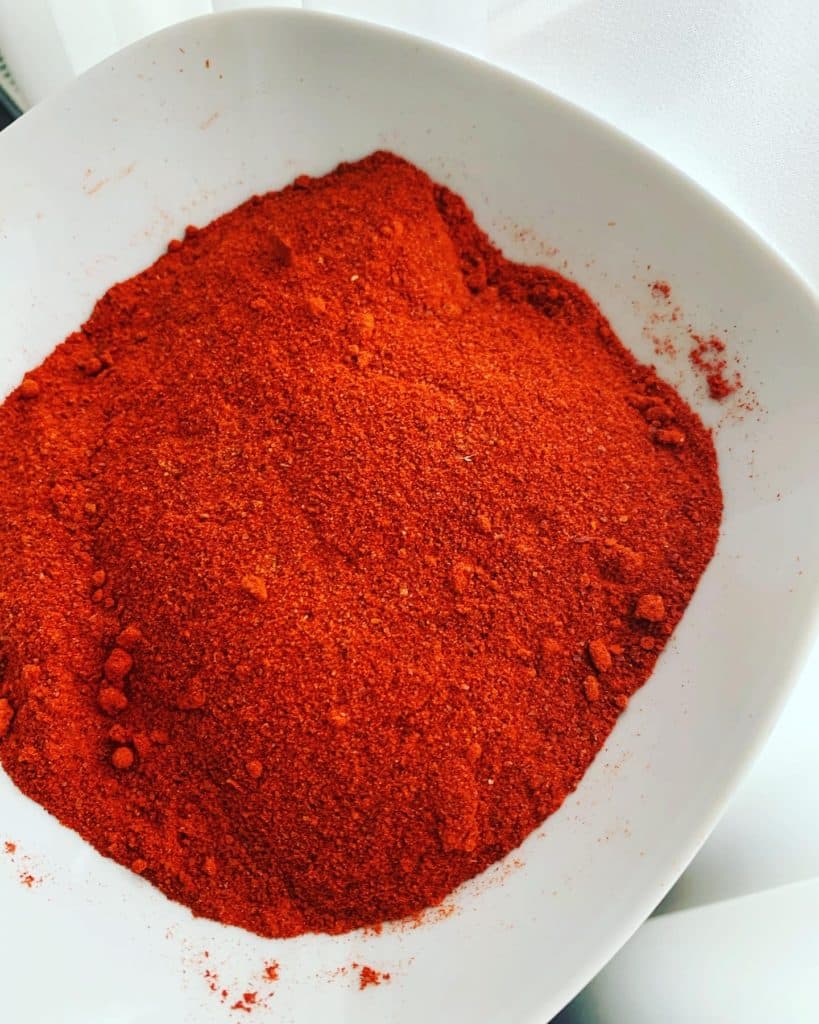
Because paprika carries so much of the flavor in this dish, quality matters. Look for fresh, flavorful Hungarian sweet paprika rather than an inexpensive variety that may taste dusty or flat.
I originally made this recipe using paprika prepared by my father from peppers he grew and dried himself, which made the dish especially meaningful. I use sweet paprika, but you can add a little hot paprika or cayenne if you prefer some heat.
Paprika can burn quickly, becoming bitter and losing its vibrant color. Keep the heat low when adding it, and stir in a little water shortly afterward.
Preparing the potatoes
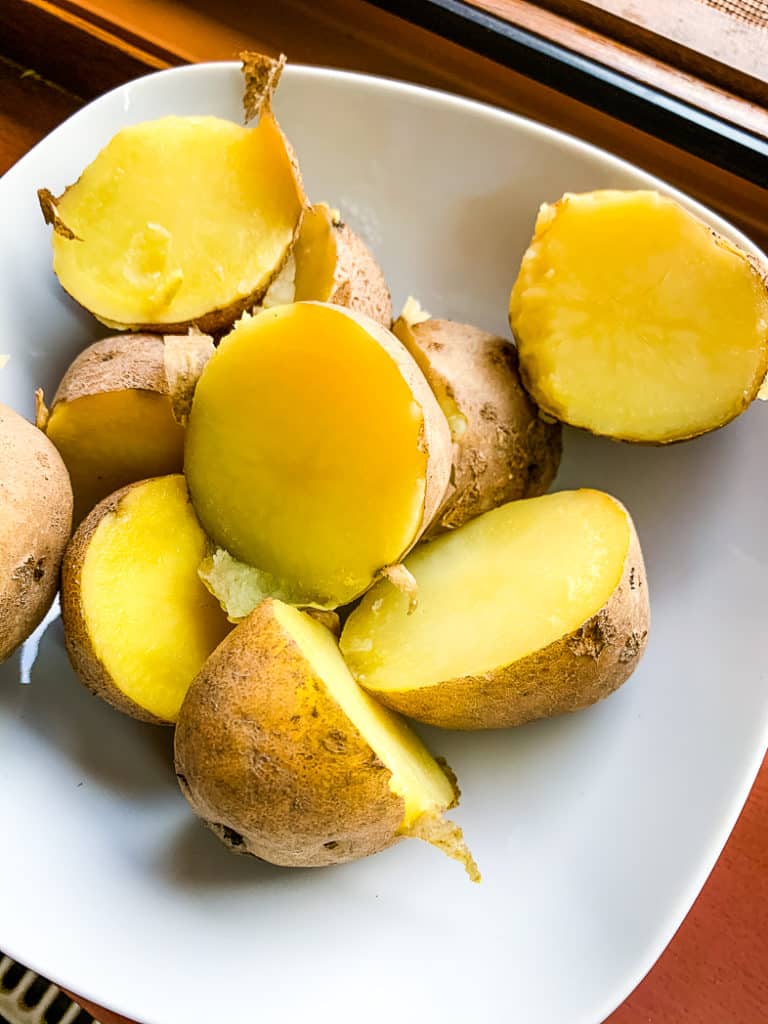
The potatoes make this pork paprikash a particularly comforting and satisfying meal, but they need to be prepared in advance. I pressure-cook the potatoes whole and in their skins, covered with water, for 5 minutes on high pressure. Once completely cooled, they are peeled, roughly cut into large chunks, and added to the stew during the final 10 minutes of cooking.
Because they are already cooked, the potatoes absorb the paprika sauce without releasing too much starch or falling apart. Cooling the potatoes before adding them also increases their resistant starch content.
For those following a lectin-free diet, pressure-cooking is one way to reduce lectins in potatoes. You can read more about reducing lectins in certain foods.
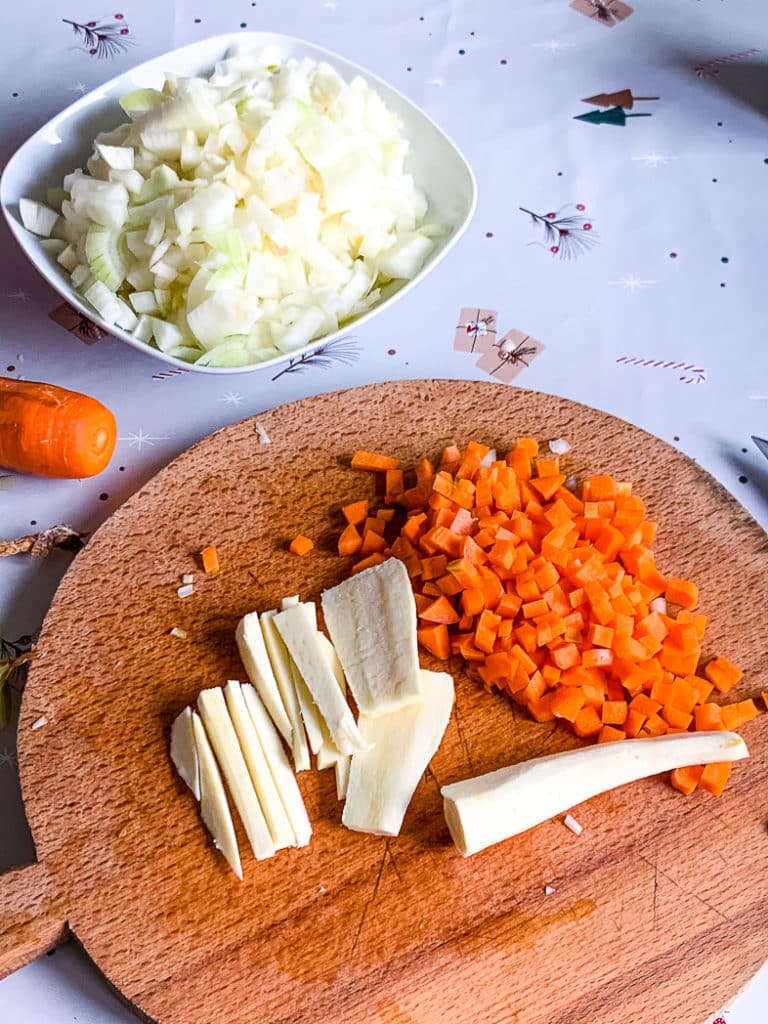
How to make pork paprikash
Slowly soften the onions
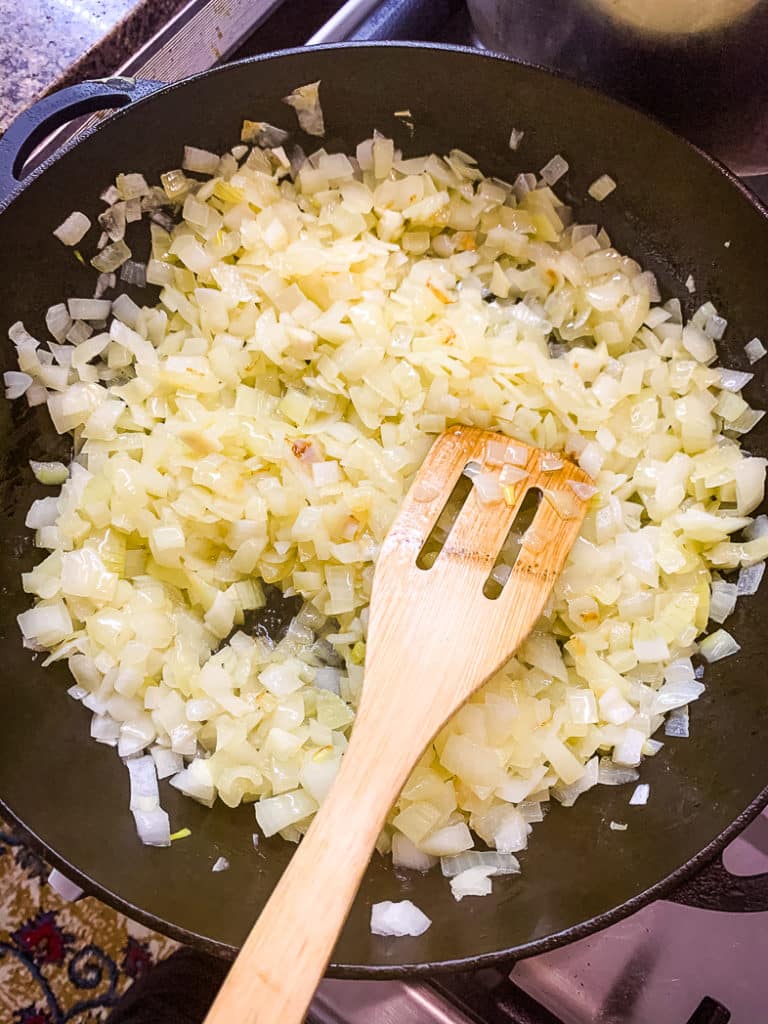
Heat enough lard and extra virgin olive oil to generously coat the bottom of a large Dutch oven or another heavy pot with a lid. Add the chopped onions and cook over low heat for 10 to 15 minutes, stirring occasionally. Give them time to become soft, translucent, and fragrant without browning. This slow start creates the foundation of the sauce.
Add the pork and seasonings
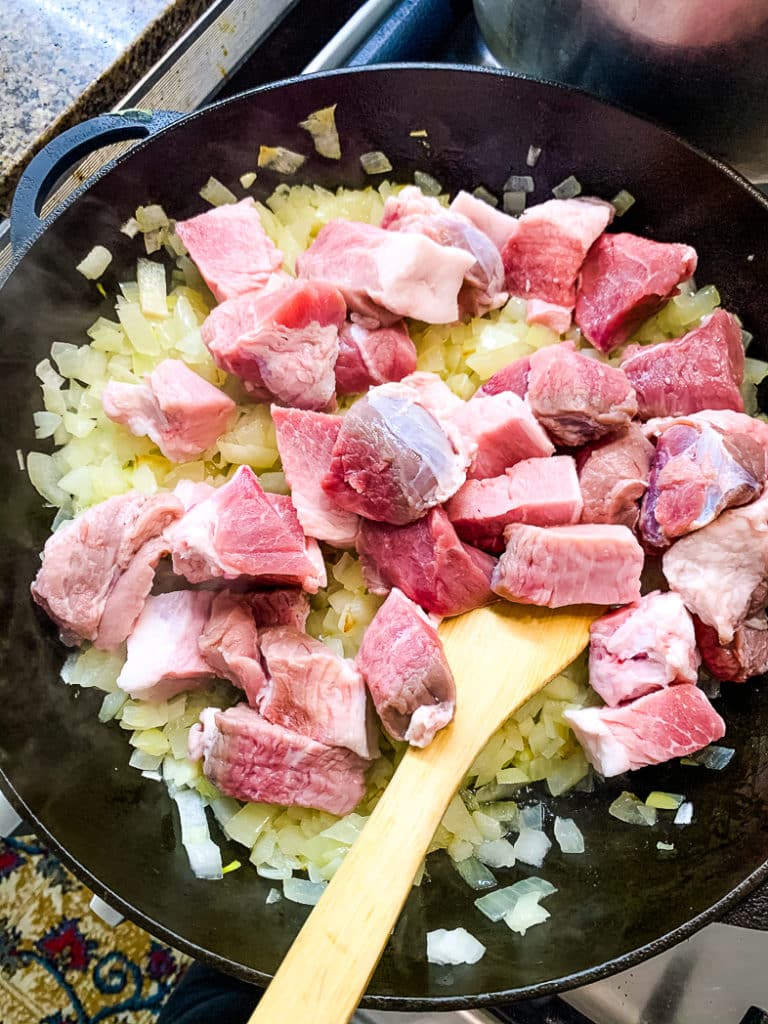
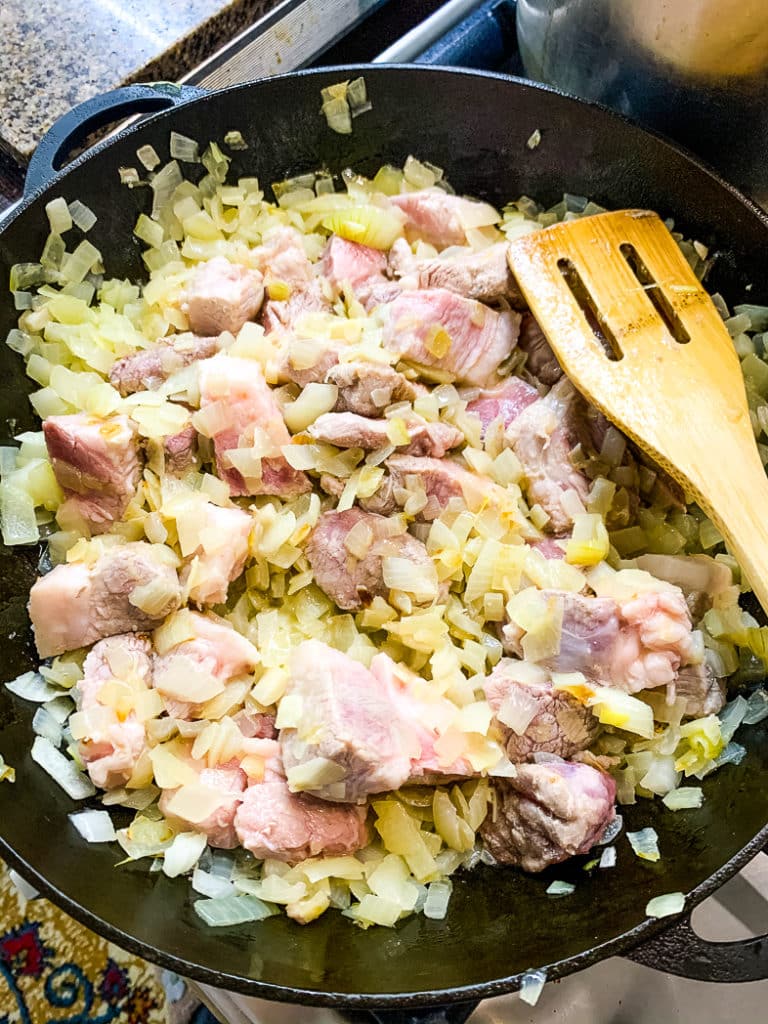
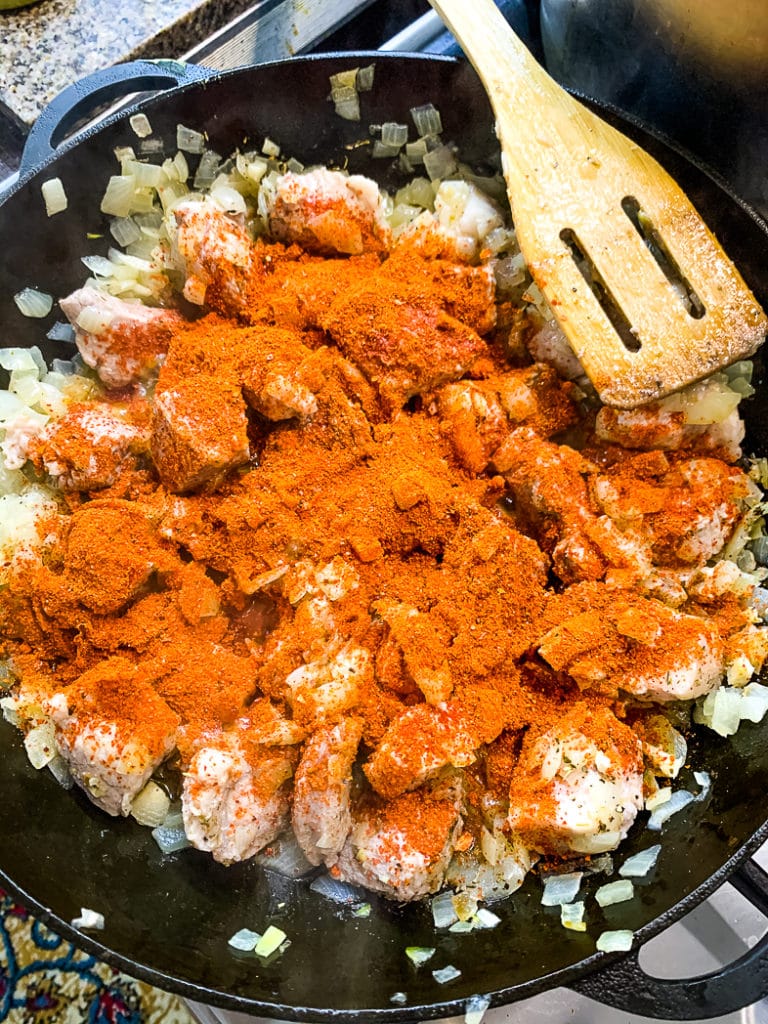
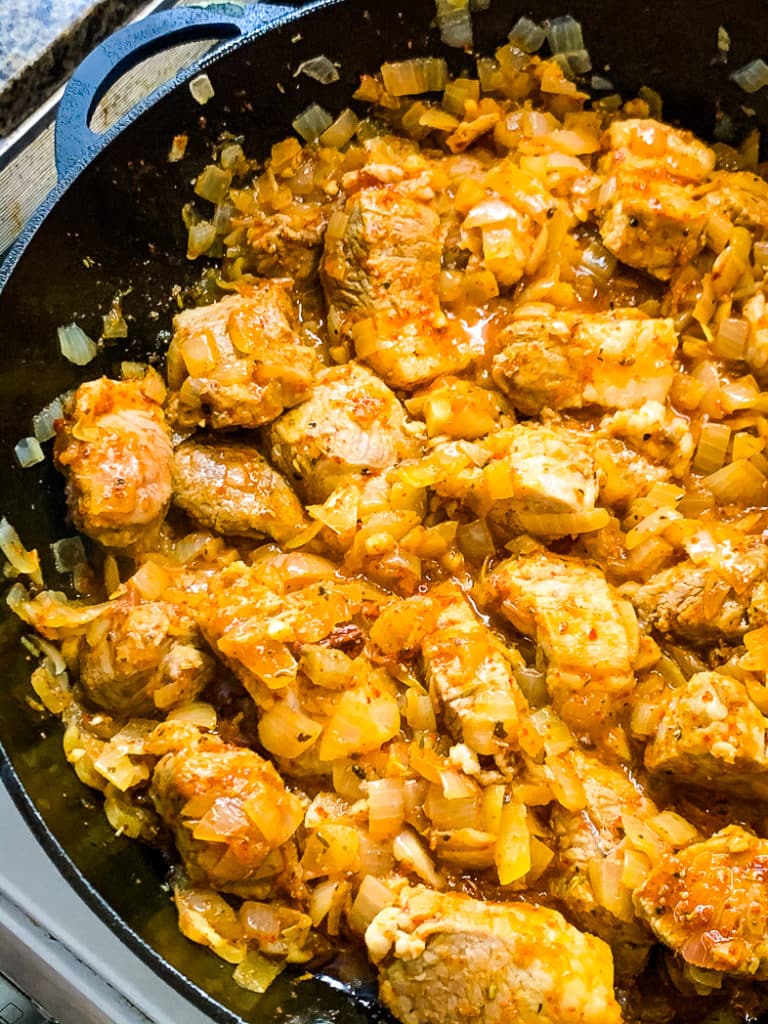
Add the pork and cook for about 10 minutes, stirring regularly so the pieces cook evenly. Stir in the garlic, salt, pepper, ground coriander, sweet Hungarian paprika, thyme, and rosemary. If you like some heat, add a little hot paprika or cayenne pepper.
Keep the temperature low and stir well to coat the meat evenly with the seasonings. Be especially careful not to let the paprika stick to the bottom of the pot or burn. Add a few tablespoons of hot water, cover the pot, and simmer gently for 10 minutes.
Build the stew with root vegetables
Add the chopped carrot, parsnip, and celeriac, followed by about 2 cups of hot water. Stir everything together, cover the pot, and simmer over low heat for approximately 45 minutes.
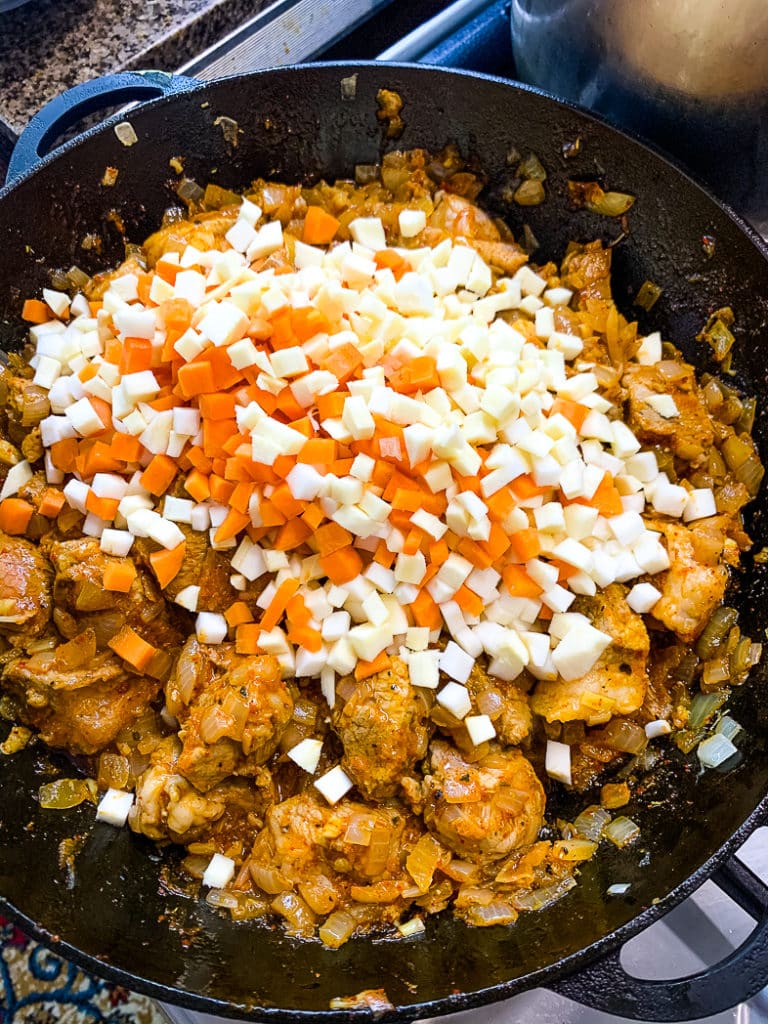
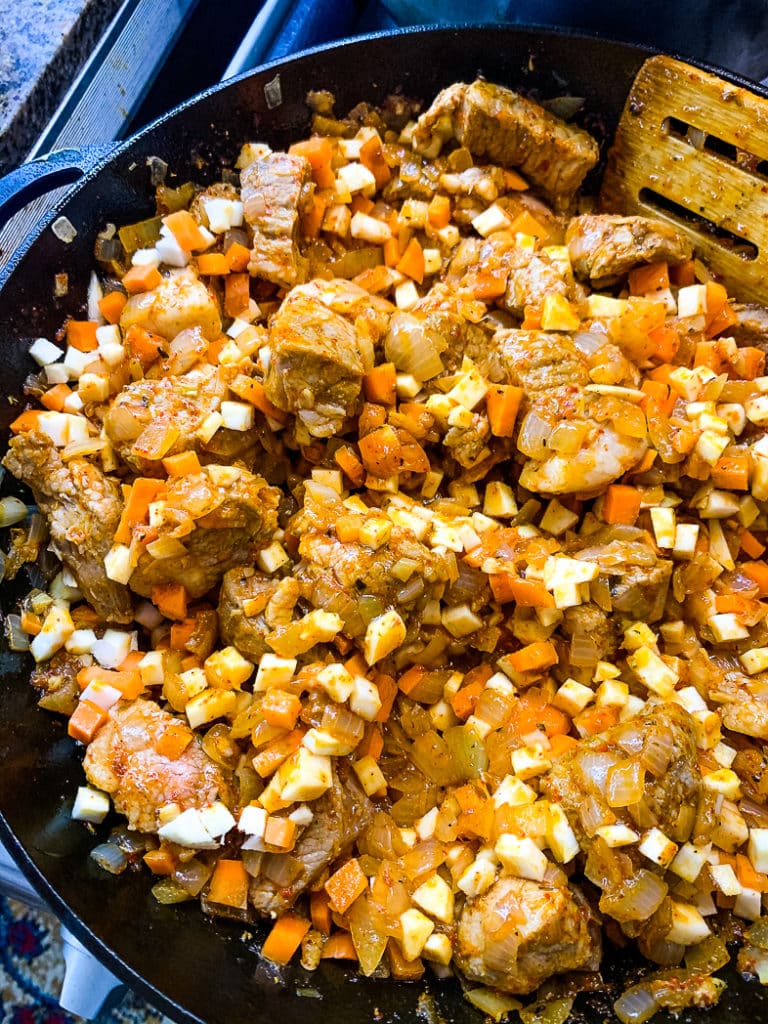
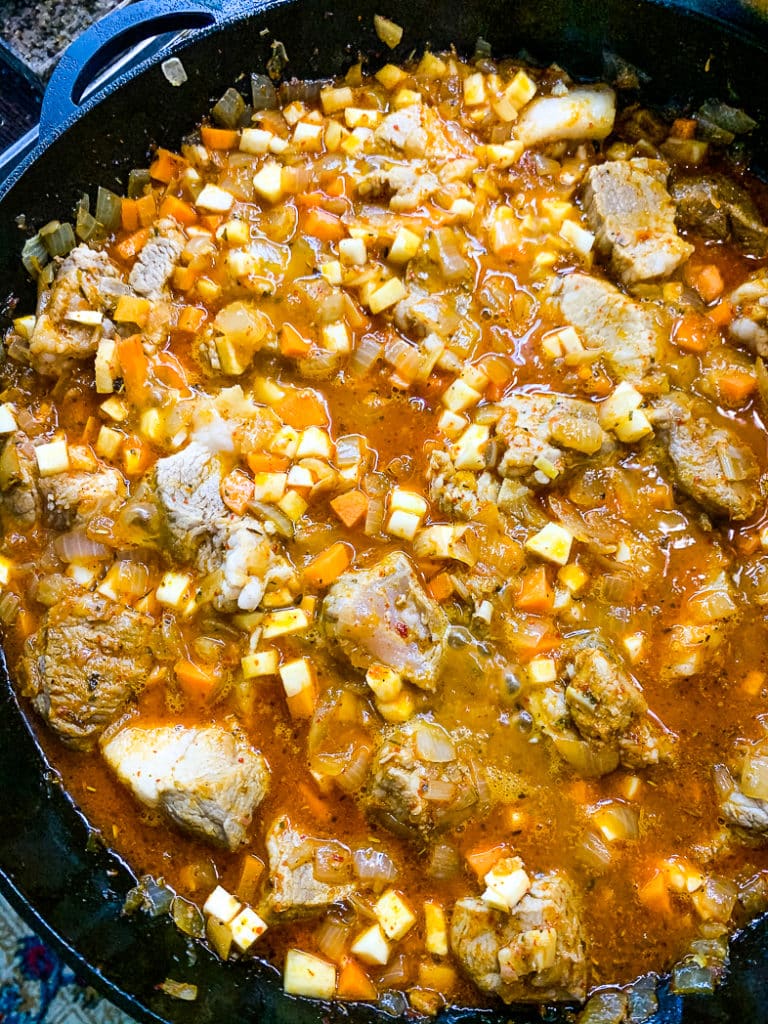
Check and stir the stew occasionally. Add more hot water as needed to prevent sticking and maintain a rich, spoonable sauce. Depending on your pot and cooking temperature, you may not need the entire 2 1/2 cups.
Finish with the potatoes
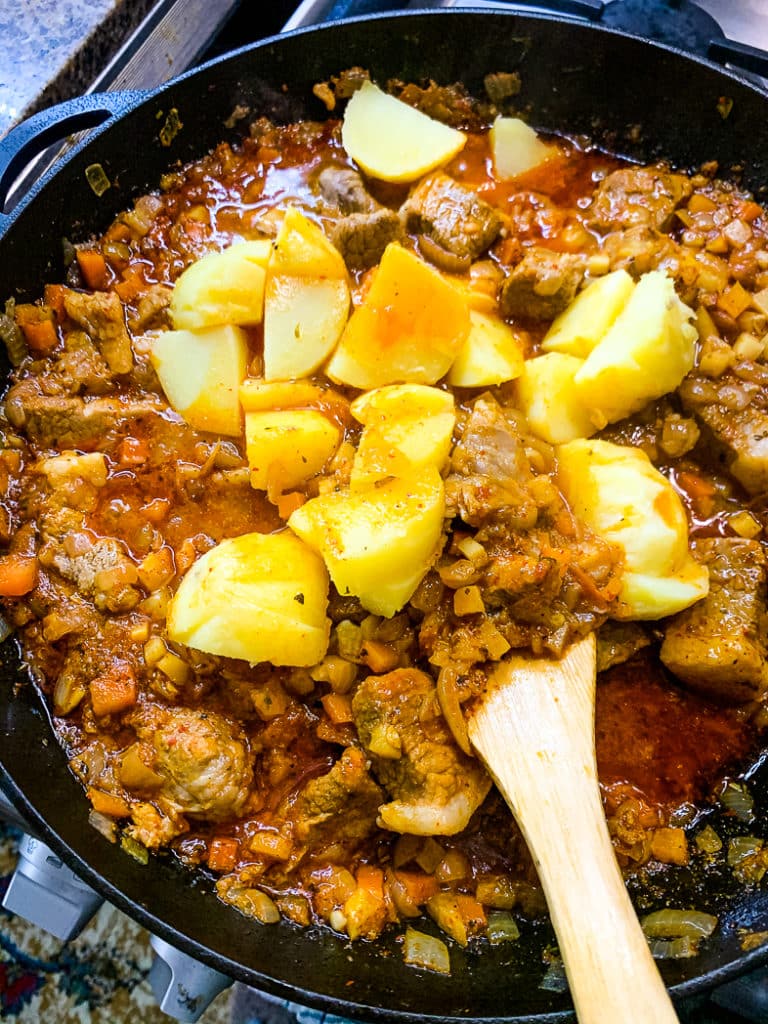
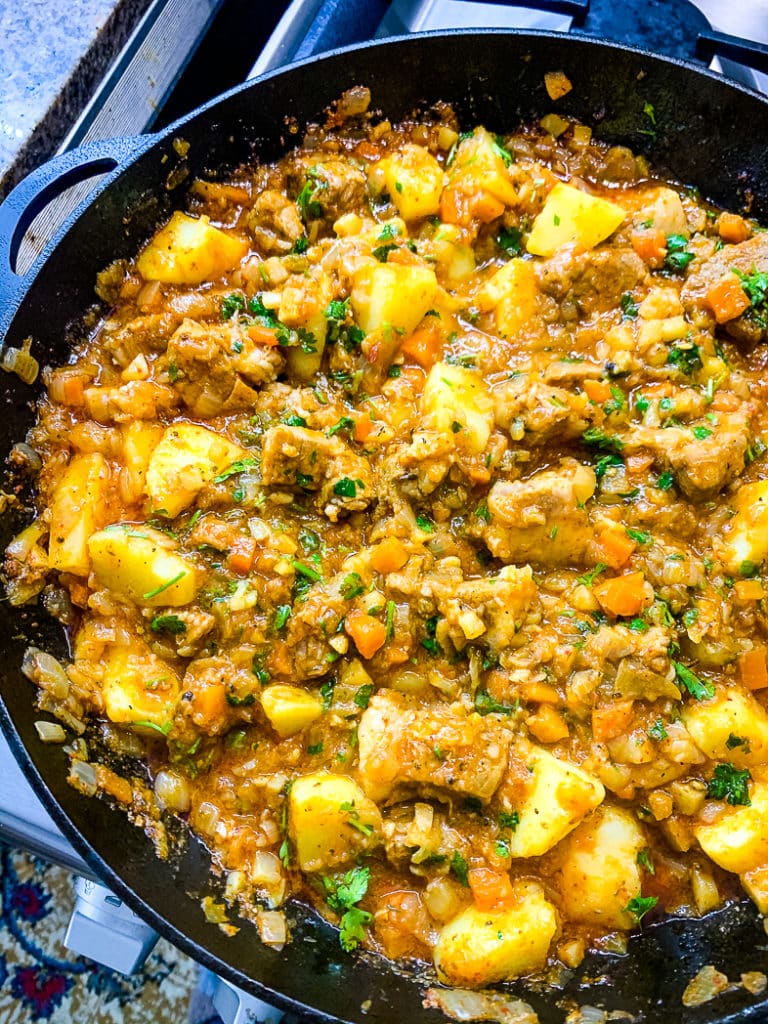
Add the previously pressure-cooked, cooled, peeled, and roughly chopped potatoes. Gently fold them into the stew until they are well coated in the paprika sauce. Cover the pot and simmer for another 10 minutes, giving the potatoes time to warm through and absorb the flavors without breaking apart. Finish with plenty of chopped fresh parsley, then taste and adjust the salt if necessary.
How to serve pork paprikash
Because this pork paprikash already contains potatoes, it does not need another starchy side. I love serving it the Romanian way, with fermented cabbage, fermented mixed vegetables, or a crisp salad to balance the richness of the stew.
It would also pair beautifully with my Beetroot and Horseradish Side Salad.
More pork recipes
For more pork recipes, check out these two easy recipes:
This recipe is part of our round up 20+ Healthy Fall Recipes. Check it out for more cozy dinner ideas made with seasonal produce.
Print
Pork Paprikash with Potatoes
- Prep Time: 20 minutes
- Cook Time: 1 hour 30 minutes
- Total Time: 1 hour 50 minutes
- Yield: 6 servings
- Category: Dinner
- Method: Stovetop
- Cuisine: Romanian
- Diet: Dairy-Free, Gluten-Free
Description
This pork paprikash is a rich, paprika-forward stew made with tender pork, lots of slowly cooked onions, root vegetables, herbs, and potatoes. Inspired by Hungarian paprikash and the comforting stews I grew up eating in Romania, this tomato-free version develops its deep flavor and beautiful color without tomato sauce. It is also naturally gluten-free and dairy-free.
Ingredients
- A mix of lard and extra virgin olive oil, enough to generously cover the bottom of the pot
- 7 medium yellow onions, chopped
- 2 pounds (about 900 grams) pork leg or pork tenderloin, cut into bite-size pieces or slightly larger
- 6 garlic cloves, minced
- 2 teaspoons salt
- 1/4 teaspoon freshly ground black pepper
- 1/4 teaspoon ground coriander
- 3 heaping teaspoons sweet Hungarian paprika
- Hot paprika or cayenne pepper, optional
- 1 sprig fresh thyme
- 1 sprig fresh rosemary
- 1 large carrot, chopped
- 1 parsnip, chopped
- 1 small celeriac, chopped
- About 2 1/2 cups (600 milliliters) hot water, divided
- 3 to 4 pressure-cooked and completely cooled white potatoes, peeled and cut into large chunks
- 1 bunch fresh parsley, chopped
Instructions
- Heat the lard and extra virgin olive oil in a large Dutch oven or another heavy pot with a lid. Add the onions and cook over low heat for 10 to 15 minutes, stirring occasionally, until soft, translucent, and fragrant but not browned.
- Add the pork and cook for about 10 minutes, stirring regularly.
- Add the garlic, salt, pepper, ground coriander, paprika, thyme, rosemary, and optional hot paprika or cayenne. Stir well to coat the pork, keeping the heat low so the paprika does not burn.
- Add a few tablespoons of hot water, cover the pot, and simmer over low heat for 10 minutes.
- Add the carrot, parsnip, and celeriac, followed by about 2 cups of hot water. Stir, cover, and simmer over low heat for approximately 45 minutes. Check and stir occasionally, adding more hot water as needed to prevent sticking.
- Add the cooked potatoes and gently stir until they are coated in the sauce. Cover and simmer for another 10 minutes.
- Stir in the chopped parsley. Taste and adjust the salt before serving.
Notes
Prepare the potatoes in advance. Pressure-cook them whole and unpeeled, covered with water, for 5 minutes on high pressure. Allow them to cool completely, then peel and cut them into large chunks.
If fresh thyme and rosemary are unavailable, replace them with approximately 1 teaspoon dried Herbes de Provence.
Add only as much water as needed to create a rich, spoonable sauce. The precise amount will depend on the pot and cooking temperature.
Keep the heat low after adding the paprika. Burnt paprika develops a bitter flavor and loses its vibrant color.
11 Comments
JD
July 26, 2021 at 4:00 pmWe really enjoyed the flavors of this recipe! We used ground pork from a local farmer who raises pigs on pasture and it was so great. Because we didn’t have potatoes, we tried the stew over cooked sorghum and it was perfect. Thank you for your mashup recipe so we could try our own version!
Claudia
July 28, 2021 at 2:48 pmSo happy you loved it and thank you for leaving a message here. Sorghum sounds like a great idea!! Also the ground pork. Hugs, Claudia
Flor
March 11, 2021 at 9:36 pmMade the Lectin-Light Pork Paprikash tonight…! It was delicious… Used grass-fed Ghee instead of lard combined with olive oil… The tenderloin worked very well with this dish…
Well done! Thanks Claudia!
Claudia
March 13, 2021 at 6:18 amSo happy to hear that Flor! Thank you for leaving a comment xx
Flor
March 10, 2021 at 2:15 pmThank you so much Claudia.. I will certainly try this recipe this week ! Also… I just tried the Italian Salad with chicken from your book.. and it was delicious! I hope you have more books in store for us in the future… ! Best wishes and happy Lectin-Free Life!!
Flor
March 10, 2021 at 11:08 amHello Claudia,
I love all of your recipes… .and I bought your book… love it!!
I am intrigued by this recipe as well… the ham .. is it uncured or fresh? Our butcher has pork shoulder or pork picnic but not pork leg… I can certainly buy a pork ham steak (at Wholefoods),,,, but they are uncured with sugars, etc. Looking forward to your advise.
Claudia
March 10, 2021 at 11:23 amHi Flor, thank you so much for the kind words. Good question, I think the most common for paprikash is tenderloin. I will edit the post to give an alternative, thank you!
Grace
January 16, 2021 at 3:50 pmThis looks delicious, but what’s pork leg cut?
Do you suggestion an alternative to that, which would be easily available in the U.S.?
Claudia
January 17, 2021 at 1:42 amHi Grace, it’s called leg or ham (I just edited the recipe, I though I had added ham). It’s the top part of the leg. If you check a butcher image of a sectioned pork online, is the part that has ham / leg written on it. I would be surprised if that’s not found in the US, but if you don’t find it, ask the butcher what he/ she recommends instead. I hope this helps.