

This recipe came about when I was craving a Thai-style coconut curry but needed to stick to a low-histamine diet. While it may not be entirely traditional, this dish is a flavorful, nourishing, and comforting take on curry that the whole family can enjoy.
Making a Low-Histamine Curry
Traditional curries often contain ingredients that aren’t suitable for those on a low-histamine diet, but I’ve found it’s surprisingly easy to create delicious, low-histamine versions using simple, wholesome ingredients. For more details, check out my guide on Low-Histamine Cooking and Food Preparation.
This recipe is inspired by a classic Thai coconut curry I used to love while living in Dubai and offers all the flavor and comfort without the histamine-triggering elements. If you’re cooking for someone who doesn’t need to follow a low-histamine diet, you can easily stir in some Thai curry paste into their portion just before serving.
While citrus isn’t typically considered low-histamine, I’ve found that a squeeze of lime works for me, though you can adjust based on your own sensitivity.
This low-histamine coconut curry is not only nutritious and comforting, but also:
- Lectin-free
- Gluten-free
- Low-carb
- High in fiber
- Easy to make
- Full of flavor
I wrote about my experience with Histamine Intolerance in this article if you would like to learn more about my journey.
Now, let’s get to the recipe.
Ingredients
- 2 tablespoons extra virgin olive oil or avocado oil
- 4 chicken thighs, skin-on (boneless thighs are an option if available)
- 1 medium sweet or yellow onion, chopped
- 4 garlic cloves, minced
- 1 thumb-sized piece ginger, grated or minced
- 1 stick lemongrass, smashed (keep one end intact for easy removal)
- 1 bay leaf
- 1/2 medium cauliflower, cut into small florets
- 2 baby bok choy, leaves separated
- 1 can full-fat coconut milk
- Salt and pepper, to taste
- 1 bunch Thai basil (substitute regular basil if necessary)
- 1-2 teaspoons lime juice or lime wedges, for serving
- Optional (not low-histamine): 1 teaspoon Thai chili paste (adjust to taste)

Instructions
Rinse the chicken thighs and pat them dry (while this not not a practice many people agree with, it is recommended in low-histamine food preparation). Heat the oil in a large sauté pan over medium heat.
Add the chicken thighs, skin-side down, and sear for about 10 minutes until the skin is golden-brown and crispy. Flip and cook for another 10 minutes. If using boneless chicken thighs, reduce the cooking time slightly. You can cover the pan with a lid during this process if needed.
Remove the chicken from the pan and set aside. If using bone-in thighs, remove the meat from the bones. Cut or shred it into pieces. Don’t worry if the chicken is slightly undercooked, as it will finish cooking in the sauce later.
In the same pan, add the chopped onions, adding more oil if necessary. Sauté the onions on medium heat, for about 5 minutes until softened, then add the minced garlic and ginger, stirring for another 1 minute. Smash the lemongrass stick (leaving one end intact) and add it to the pan along with the bay leaf. Stir everything together.
If you are using Thai chili paste, stir in 1 teaspoon (or more, depending on your taste) at this point (this will work if you are not extremely sensitive to histamines, otherwise, skip this step). If the mixture starts sticking to the pan, add a splash of water to prevent burning, as burnt aromatics can make the dish bitter.
Pour the coconut milk into the pan and stir in the cauliflower florets and the shredded chicken. Season with salt and pepper to taste. Bring to a boil and allow the mixture to simmer on low heat for about 7 minutes.
Add the bok choy leaves and continue simmering for another 5 minutes, or until the vegetables are tender. Remove the lemongrass stick.
Stir in chopped Thai basil leaves and finish with a squeeze of lime juice. Adjust seasoning with more salt, pepper, or lime as needed. Serve with lime wedges on the side. (Note: For some people with histamine intolerance, citrus in high quantities can be a problem, but in my experience, a small amount would not cause problems; do whatever feels right to you).
If you share the meal with a person who doesn’t have to eat low-histamine (like I did), you can separate the portions and stir in some Thai chili paste for them just before serving.

More Low-Histamine Recipes
If you want to try other low-histamine recipes, you may like our:
- Chicken and Cabbage Soup
- Sweet Potato Brownie, Vegan
- Sauteed Cabbage with Fennel and Leeks
- Instant Pot Beef Taco Bowl with Tostones
Enjoy!
Print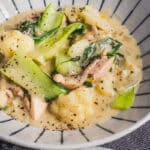
Easy Low-Histamine Curry (Thai-Style)
- Prep Time: 15 minutes
- Cook Time: 40 minutes
- Total Time: 55 minutes
- Yield: 4
Description
This recipe came about when I was craving a Thai-style coconut curry but needed to stick to a low-histamine diet. While it may not be entirely traditional, this dish is a flavorful, nourishing, and comforting take on curry that the whole family can enjoy.
Ingredients
- 2 tablespoons extra virgin olive oil or avocado oil
- 4 chicken thighs, skin-on (boneless thighs are an option if available)
- 1 medium sweet or yellow onion, chopped
- 4 garlic cloves, minced
- 1 thumb-sized piece ginger, grated or minced
- 1 stick lemongrass, smashed (keep one end intact for easy removal)
- 1 bay leaf
- 1/2 medium cauliflower, cut into small florets
- 2 baby bok choy, leaves separated
- 1 can full-fat coconut milk
- Salt and pepper, to taste
- 1 bunch Thai basil (substitute regular basil if necessary)
- Optional: 1-2 teaspoons lime juice or lime wedges, for serving
- Optional (not low-histamine): 1 teaspoon Thai chili paste (adjust to taste)
Instructions
- Rinse the chicken thighs and pat them dry (while this not not a practice many people agree with, it is recommended in low-histamine food preparation). Heat the oil in a large sauté pan over medium heat. Add the chicken thighs, skin-side down, and sear for about 10 minutes until the skin is golden-brown and crispy. Flip and cook for another 10 minutes. If using boneless chicken thighs, reduce the cooking time slightly. You can cover the pan with a lid during this process if needed.
- Remove the chicken from the pan and set aside. If using bone-in thighs, remove the meat from the bones. Cut or shred it into pieces. Don’t worry if the chicken is slightly undercooked, as it will finish cooking in the sauce later.
- In the same pan, add the chopped onions, adding more oil if necessary. Sauté the onions on medium heat, for about 5 minutes until softened, then add the minced garlic and ginger, stirring for another 1 minute. Smash the lemongrass stick (leaving one end intact) and add it to the pan along with the bay leaf. Stir everything together.
- If you are using Thai chili paste, stir in 1 teaspoon (or more, depending on your taste) at this point (this will work if you are not extremely sensitive to histamines, otherwise, skip this step). If the mixture starts sticking to the pan, add a splash of water to prevent burning, as burnt aromatics can make the dish bitter.
- Pour the coconut milk into the pan and stir in the cauliflower florets and the shredded chicken. Season with salt and pepper to taste. Bring to a boil and allow the mixture to simmer on low heat for about 7 minutes.
- Add the bok choy leaves and continue simmering for another 5 minutes, or until the vegetables are tender. Remove the lemongrass stick.
- Stir in chopped Thai basil leaves and finish with a squeeze of lime juice. Adjust seasoning with more salt, pepper, or lime as needed. Serve with lime wedges on the side. (Note: For some people with histamine intolerance, citrus in high quantities can be a problem, but in my experience, a small amount would not cause problems; do whatever feels right to you).
- If you share the meal with a person who doesn’t have to eat low-histamine (like I did), you can separate the portions and stir in some Thai chili paste for them just before serving.

10 Comments
Linda Sibley
April 7, 2026 at 7:16 amI made this Thai chicken curry dish last night without the chili paste and it was delicious. I had lemongrass essential oil from Do Terra and used one drop. Making it again soon.