
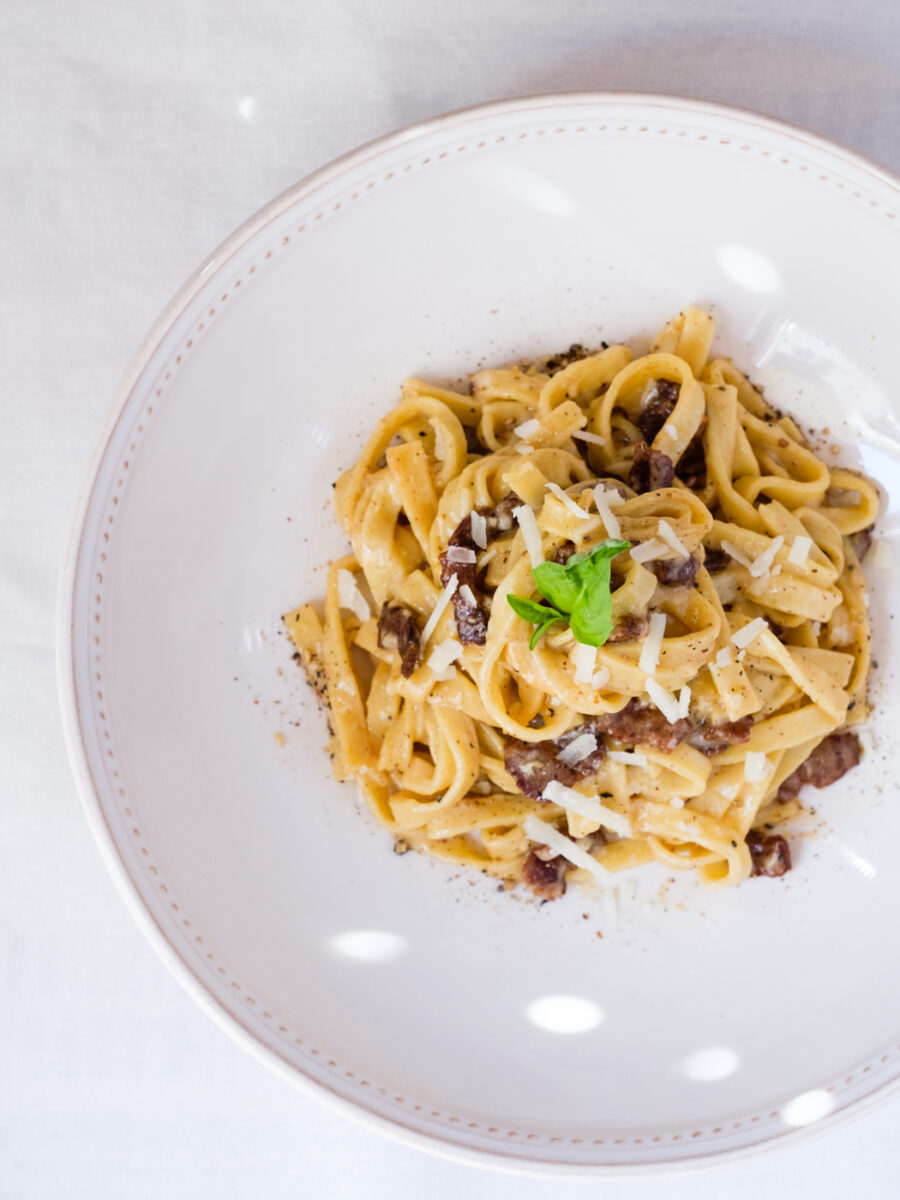
This gluten-free pasta carbonara is a delicious take on the classic Roman favorite, made with just a handful of simple ingredients and a creamy sauce created from eggs and cheese — no cream required. Made with gluten-free fettuccine, crispy pork belly or pancetta, Pecorino Romano, and plenty of black pepper, it stays remarkably close to the traditional recipe while being naturally grain-free when paired with the right pasta.
Carbonara Doesn’t Need Cream
One of the biggest misconceptions about carbonara is that the creamy sauce comes from heavy cream. In reality, authentic Roman carbonara relies on just eggs, grated cheese, pasta water, and the rendered fat from the pork to create its silky texture. Once you learn the technique, you’ll realize how surprisingly simple—and incredibly satisfying—this iconic pasta dish really is.
I’ve learned many little tricks over the years from watching Jamie Oliver cook Italian classics. His respect for traditional recipes and genuine passion for good food have taught me a lot, including how to make a beautifully creamy carbonara sauce without scrambling the eggs.
The Secret is Choosing the Right Pasta
The biggest challenge when making a grain-free or gluten-free carbonara isn’t the sauce — it’s finding a pasta with the right texture. For years, I’ve relied on Cappello’s almond flour fettuccine, which cooks in only 90 seconds and has a remarkably authentic bite. My husband, who happily eats traditional wheat pasta, genuinely enjoys it and never feels like he’s compromising.
If you have another good-quality, gluten-free fresh pasta that doesn’t become mushy when cooked — or even homemade pasta — it will work just as well. The key is to have your sauce ready before the pasta goes into the water, since fresh gluten-free pasta generally cooks very quickly.
While Cappello’s pasta can only be found in supermarkets, in the frozen section, this sorghum spaghetti from Big Green can be ordered online.
Simple, Quality Ingredients Make all the Difference
Traditional Roman carbonara is made with guanciale, cured pork cheek, but pancetta is a very common substitute, and good-quality pork belly works beautifully too. I usually use fresh pork belly from my local sustainable farm because I love its flavor and texture after it becomes crispy in the pan.
The remaining ingredients couldn’t be simpler: pasture-raised eggs, freshly grated Pecorino Romano (or Parmigiano Reggiano, or a combination of both), plenty of freshly cracked black pepper, and a garlic clove to gently perfume the rendered fat. I also like to add a little lemon zest at the end. It’s not traditional, but it brings a subtle freshness that I think works wonderfully.
Recipe Notes
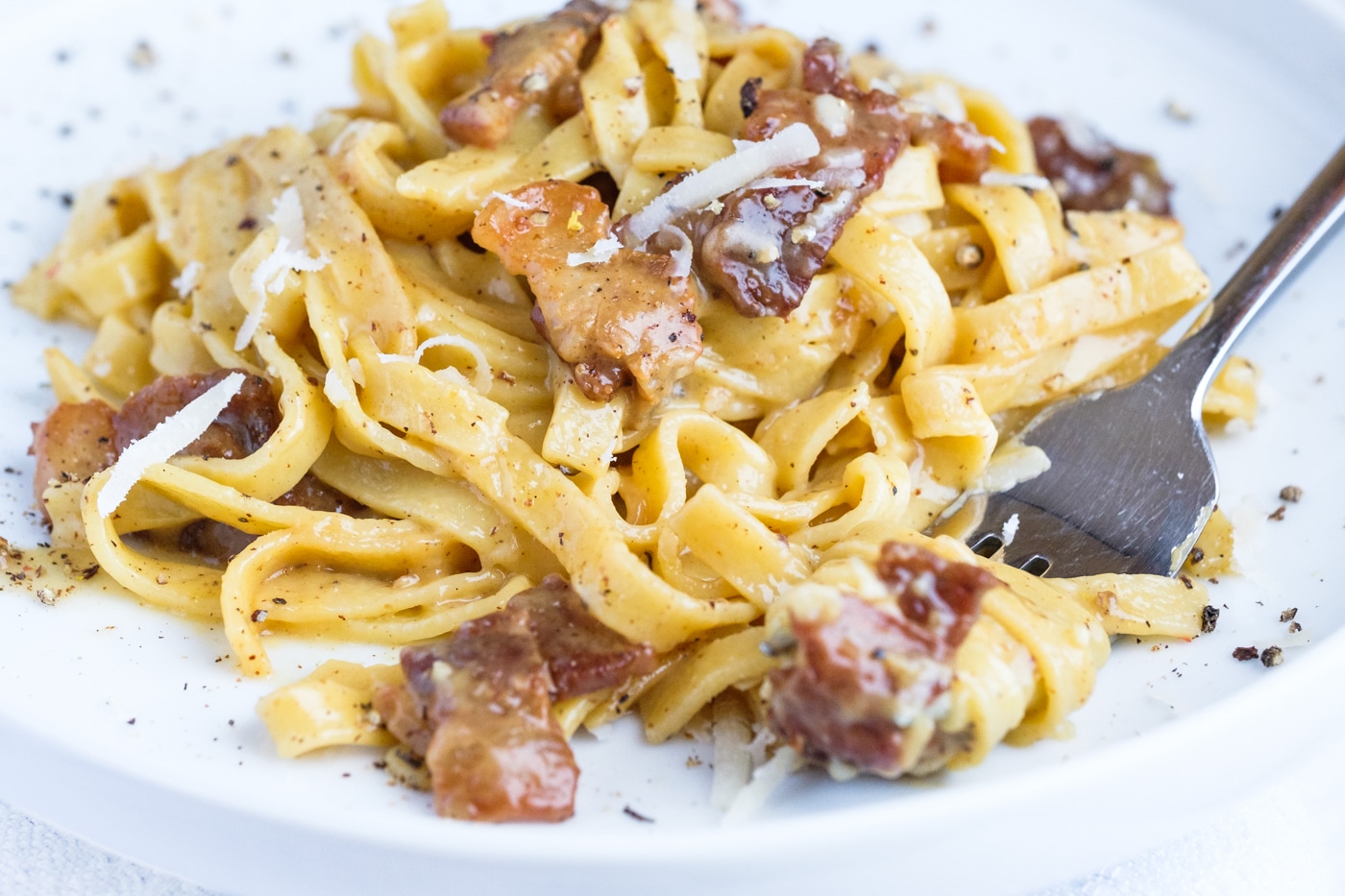
About the pork belly: One pound of fresh pork belly may sound like a lot, but much of its weight is rendered as fat during cooking. Once cooked, the amount of meat is much smaller. Feel free to use less if you prefer; the recipe will still be delicious.
About the pasta: Fresh gluten-free pasta cooks very quickly. Have the sauce completely prepared before adding the pasta to the boiling water so everything comes together while the pasta is still hot.
About the sauce: The secret to a silky carbonara is to remove the pan from the heat before adding the egg mixture. The residual heat gently cooks the eggs while the pasta water helps create a smooth, creamy sauce rather than scrambled eggs.
For other Italian-inspired dishes, be sure also to try my Veggie Loaded, Lectin-Light Bolognese Sauce Without Tomatoes and my Homemade Green Gnocchi with Arugula and Cassava Flour.
This post contains affiliate links, which means I get a small commission if you choose to purchase something via one of my links, at no extra cost to you.
Print
Gluten-Free Pasta Carbonara
- Prep Time: 10 minutes
- Cook Time: 15 minutes
- Total Time: 25 minutes
- Yield: 4
- Category: Dinner
- Method: Stovetop
- Cuisine: Italian
- Diet: Gluten-Free
Description
This gluten-free pasta carbonara is a delicious take on the classic Roman favorite, made with just a handful of simple ingredients and a creamy sauce created from eggs and cheese — no cream required. Made with gluten-free fettuccine, crispy pork belly or pancetta, Pecorino Romano, and plenty of black pepper, it stays remarkably close to the traditional recipe while being naturally grain-free when paired with the right pasta.
Ingredients
- 1 package Cappello’s Fettuccine, or your favorite gluten-free or grain-free pasta (even homemade)
- 1 pound (454 g) fresh or cured pork belly, cut into cubes (or pancetta, or good-quality bacon)
- 1 whole pasture-raised egg
- 1 extra egg yolk
- 1/3 cup grated Pecorino Romano (or Pecorino Toscano, Parmigiano Reggiano, or a combination)
- 1 teaspoon coarsely ground black pepper, or more to taste
- 1–2 garlic cloves
- Zest of 1 lemon (optional)
- Salt, only if needed (see Notes)
Instructions
- Bring a large pot of water to a boil before you begin cooking the pork belly. If using Cappello’s fettuccine, remember it cooks in only 90 seconds, so you’ll want everything else ready.
- Heat a large frying or sauté pan over medium-low heat. Add the cubed pork belly and the whole crushed garlic clove. Cook, stirring occasionally, until the pork belly is browned and crispy and most of the fat has rendered.
- Meanwhile, prepare the sauce. In a bowl, whisk together the whole egg, the extra yolk, grated cheese, and plenty of freshly ground black pepper. If your pork belly is fresh and not cured or salted, season the egg mixture with a little salt. Set aside.
- Once the pork belly is cooked, remove the excess rendered fat, leaving just enough to lightly coat the bottom of the pan. Save the extra fat in a jar for cooking another day. Remove and discard the garlic clove.
- Return the pan with the pork belly to the stove over the lowest possible heat.
- Cook the pasta according to the package instructions. If using Cappello’s fettuccine, boil it for exactly 90 seconds.
- Transfer the cooked pasta directly to the pan with the pork belly, adding a few tablespoons of the pasta cooking water.
- Turn off the heat, or move the pan to a cool surface. Immediately pour in the egg and cheese mixture, add the lemon zest if using, and toss everything together until the pasta is evenly coated. If needed, add another few tablespoons of the hot pasta water until the sauce becomes silky and creamy.
- Serve immediately.
Notes
Traditional Roman carbonara is made with guanciale, but pancetta, good-quality bacon, or pork belly all work well. I usually use fresh pork belly from my local sustainable farm.
Pecorino Romano is the classic cheese for carbonara, but Pecorino Toscano, Parmigiano Reggiano, or a combination of the two are all excellent options.
The key to a creamy carbonara is not cooking the eggs over direct heat. Make sure the pan is off the heat before adding the egg mixture so the residual heat gently cooks the eggs without scrambling them.
One pound of pork belly may sound like a lot, but much of its weight is rendered as fat during cooking. Feel free to use a little less if you prefer—the recipe will still turn out beautifully.
Fresh gluten-free pasta cooks very quickly, so have the sauce completely prepared before adding the pasta to the boiling water.
This recipe makes about 4 small servings, depending on whether it is served as a main course or, in the traditional Italian style, as a smaller pasta course before the main dish.
7 Comments
Christian
July 14, 2026 at 6:28 amOne of my favorite recipes.
Rachel Lakewood CO
February 8, 2020 at 11:06 amIn step 1 do you mean 90 minutes or seconds?
Claudia
February 8, 2020 at 11:15 amHi Rachel, It’s 90 seconds, as per the pack instructions. Sorry, just saw I wrote minutes, changed it. Thanks for pointing that out! xx
Elizabeh Elwell
October 30, 2018 at 8:50 pmI cannot wait to try this, Claudia.
Claudia
October 31, 2018 at 8:33 amOh, this is so good. An occasional treat 😀 xx
Cande Huml-Hickey
May 14, 2018 at 6:00 amThank you so much for your recipes. I’m new to this & it really helps.
Claudia
May 17, 2018 at 1:47 pmMy pleasure <3