
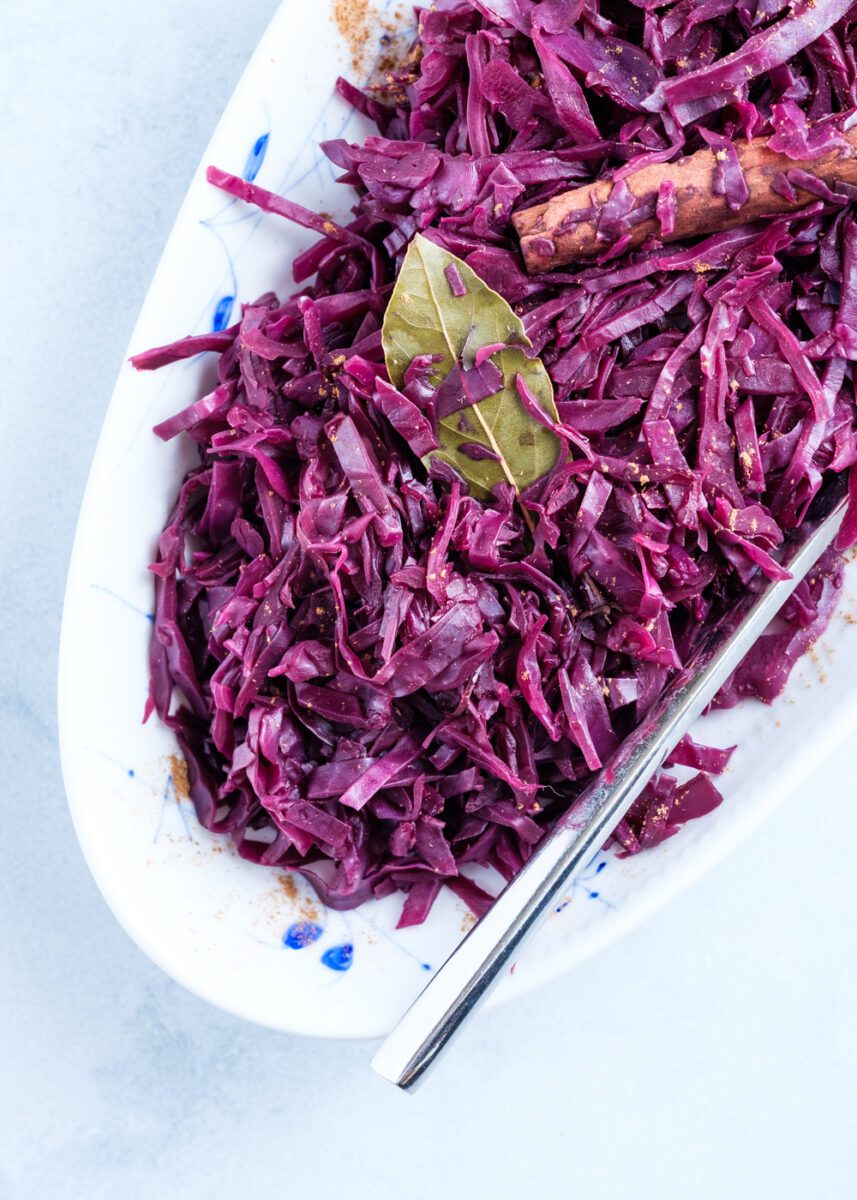
This Danish sweet and sour red cabbage is a simple, festive side dish traditionally served with Christmas roasts and other rich winter meals. Slowly braised with red wine vinegar, apple, cinnamon, cloves, and bay leaves, it becomes tender, aromatic, and perfectly balanced between sweet and tangy. My version keeps all those comforting Danish flavors but is made without added sugar.
A Danish Christmas Classic
I was first introduced to rødkål, the classic Danish sweet and sour red cabbage, when I spent my first Christmas with my now-husband, who is Danish. It was a jarred version that we simply warmed before serving, which is actually very common in Denmark.
I was already a cabbage fan, although the Romanian ways of preparing cabbage I grew up with are quite different. I immediately loved the soft texture of Danish red cabbage and the combination of acidity, sweetness, and warming spices alongside a rich Christmas meal.
That was more than a decade ago, and since then, this has become one of the dishes we make during the holidays.
Making Danish Red Cabbage Without Sugar
Traditional Danish red cabbage usually contains sugar to balance the acidity of the vinegar. For this version, I use just one tablespoon of allulose or monk fruit sweetener. You can easily increase this amount to suit your taste.
The apple also contributes natural sweetness as it cooks, while cinnamon and cloves add their own perception of sweetness and warmth. A small amount of good-quality aged balsamic vinegar added at the end rounds everything out beautifully.
If you prefer to use regular sugar, one tablespoon is enough for this recipe, in my opinion. The goal isn’t to make the cabbage noticeably sweet, but to create that characteristic sweet-and-sour balance.


Ingredients
You only need a handful of simple ingredients:
- Red cabbage — finely sliced or shredded so it cooks evenly and becomes tender. Both regular red cabbage and the pointed variety work, but the regular one will have a more intense color.
- Red wine vinegar — provides the acidity that gives the dish its characteristic tang.
- Allulose or monk fruit sweetener — just enough to balance the vinegar without making the cabbage overly sweet.
- Cloves, cinnamon, and bay leaves — infuse the cabbage with warm, aromatic flavor as it slowly braises.
- Apple — adds subtle natural sweetness and another layer of festive flavor.
- Aged balsamic vinegar — added at the end for a little sweetness, acidity, and depth.
- Salt and freshly ground black pepper — to bring everything together.

How to Make Danish Sweet and Sour Red Cabbage
Add the finely shredded cabbage to a large skillet or sauté pan along with the red wine vinegar, sweetener, cloves, bay leaves, and cinnamon stick. Toss everything together, cover the pan, and cook over low to medium heat until the cabbage begins to gently sizzle.
Reduce the heat to low and let the cabbage slowly braise for about 30 minutes. Check it every 10 minutes or so, giving it a good stir and adding approximately 2 tablespoons of water whenever necessary. You want enough moisture to prevent the cabbage from sticking, but not so much that it becomes watery. The cabbage should slowly soften in its own steam and juices.
After 30 minutes, add the diced apple, cover again, and continue cooking for another 10 minutes, or until the cabbage is tender but still has some texture.
Remove the whole spices, season with salt and freshly ground black pepper, and finish with about one teaspoon of thick, aged balsamic vinegar. Taste and adjust the sweet-and-sour balance if necessary.
How to Serve Danish Red Cabbage
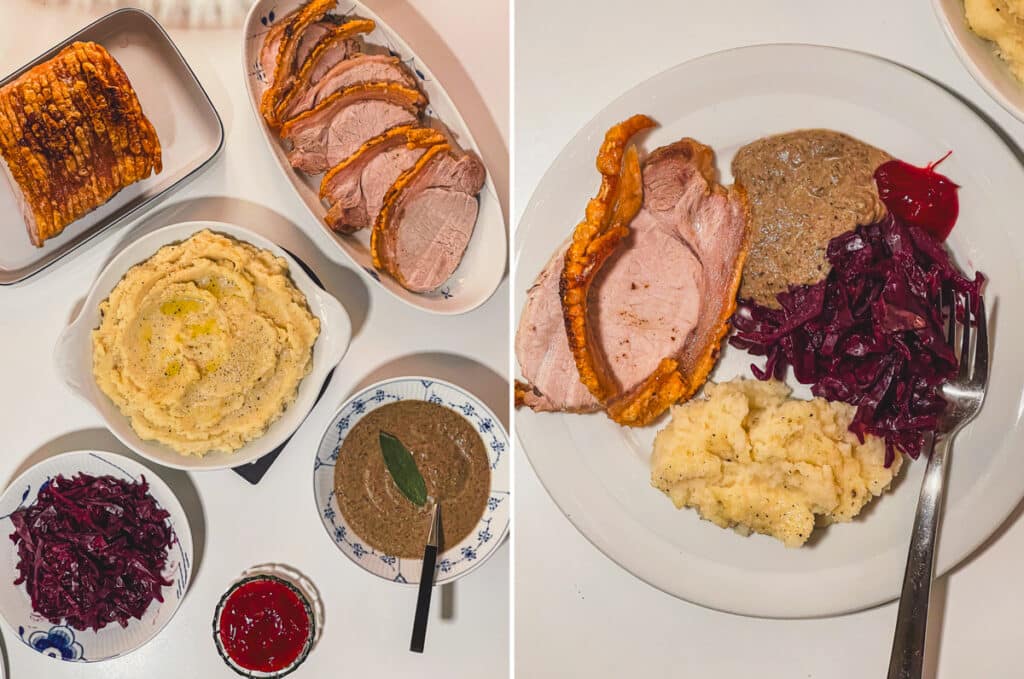
This is especially good with rich roasted meats, which is exactly why it works so well on a traditional Danish Christmas table. Serve it alongside Danish pork roast with crackling, pork chops, pot roast, spare ribs, meatballs, or other hearty winter dishes.
It also makes a beautiful side dish for Thanksgiving or Christmas, especially when you want something colorful and tangy to balance richer foods. Serve it alongside other nourishing festive side dishes such as creamy mushroom sauce, sugar-free cranberry sauce, and mashed cauliflower, celeriac, and parsnip.
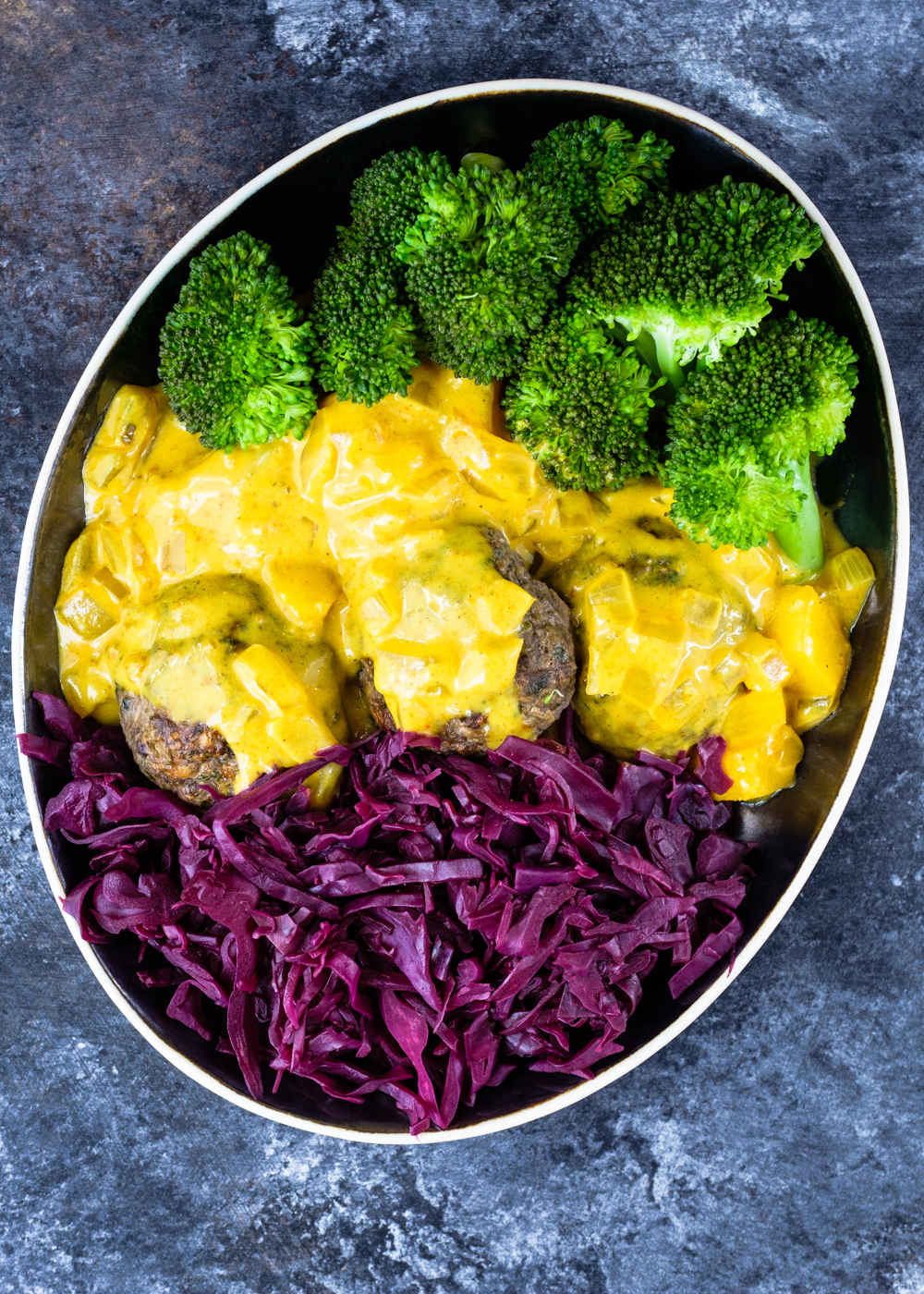
And there’s no need to save it only for the holidays. We also enjoy it as an everyday vegetable side, sometimes alongside steamed broccoli and Scandinavian meatballs with curry sauce.
Make It Ahead
Danish red cabbage is an excellent make-ahead side dish. In fact, the flavors become even more integrated after resting. Prepare it in advance, refrigerate it in a covered container, and gently reheat it before serving. If it seems a little dry when reheating, add a small splash of water.
*This post contains affiliated links, which means I get a small commission if you choose to purchase something via one of my links, at no extra cost to you.
Print
Danish Sweet and Sour Red Cabbage (Sugar-Free)
- Prep Time: 10 minutes
- Cook Time: 40 minutes
- Total Time: 50 minutes
- Yield: 4 servings
- Category: Side Dish
- Method: Stovetop
- Cuisine: Scandinavian
- Diet: Gluten-Free, Low-Carb, Vegan
Description
This Danish sweet and sour red cabbage is a simple, festive side dish traditionally served with Christmas roasts and other rich winter meals. Slowly braised with red wine vinegar, apple, cinnamon, cloves, and bay leaves, it becomes tender, aromatic, and perfectly balanced between sweet and tangy. My version keeps all those comforting Danish flavors but is made without added sugar.
Ingredients
- 1 medium head red cabbage, finely sliced or shredded
- 1/4 cup (60 ml) red wine vinegar
- 1 tablespoon allulose or monk fruit sweetener
- 10 whole cloves
- 2 bay leaves
- 1 Ceylon cinnamon stick
- A few tablespoons water, as needed
- 1 apple, cut into small cubes
- Salt and freshly ground black pepper, to taste
- 1 teaspoon aged Modena balsamic vinegar
Instructions
- Add the shredded cabbage, red wine vinegar, sweetener, cloves, bay leaves, and cinnamon stick to a large skillet or sauté pan. Toss well, cover, and cook over low to medium heat until the cabbage begins to gently sizzle.
- Reduce the heat to low and braise, covered, for about 30 minutes. Stir every 10 minutes and add about 2 tablespoons of water at a time as needed to prevent sticking. The cabbage should remain moist but not watery.
- Add the diced apple, cover, and continue to braise for about 10 minutes, or until the cabbage is tender.
- Remove the cloves, bay leaves, and cinnamon stick. Season with salt and pepper and finish with the aged balsamic vinegar. Taste and adjust the seasoning and sweet-and-sour balance if necessary.
- Serve warm, or refrigerate and gently reheat before serving.
Notes
Both regular red cabbage and the pointed variety work, but the regular one will have a more intense color.
The exact cooking time will depend on how finely the cabbage is sliced and how tender you prefer it. For a softer, more traditional texture, simply continue braising a little longer, adding small amounts of water as needed.
This dish can be prepared in advance and reheats very well.
2 Comments
Tammy
January 13, 2019 at 2:16 pmClaudia, I absolutely love this recipe! It’s one of my weekly staples along with your roasted brussels sprouts and mushrooms. (The first time I made it I had no cloves, the second time I had cloves, but found that I like it better without.) I love splash of color and flavor this adds to my dishes. I think it goes with everything!
Claudia
January 13, 2019 at 8:21 pmSo happy to hear you love it, Tammy. Thank you so much for taking the time to leave this message. xx