
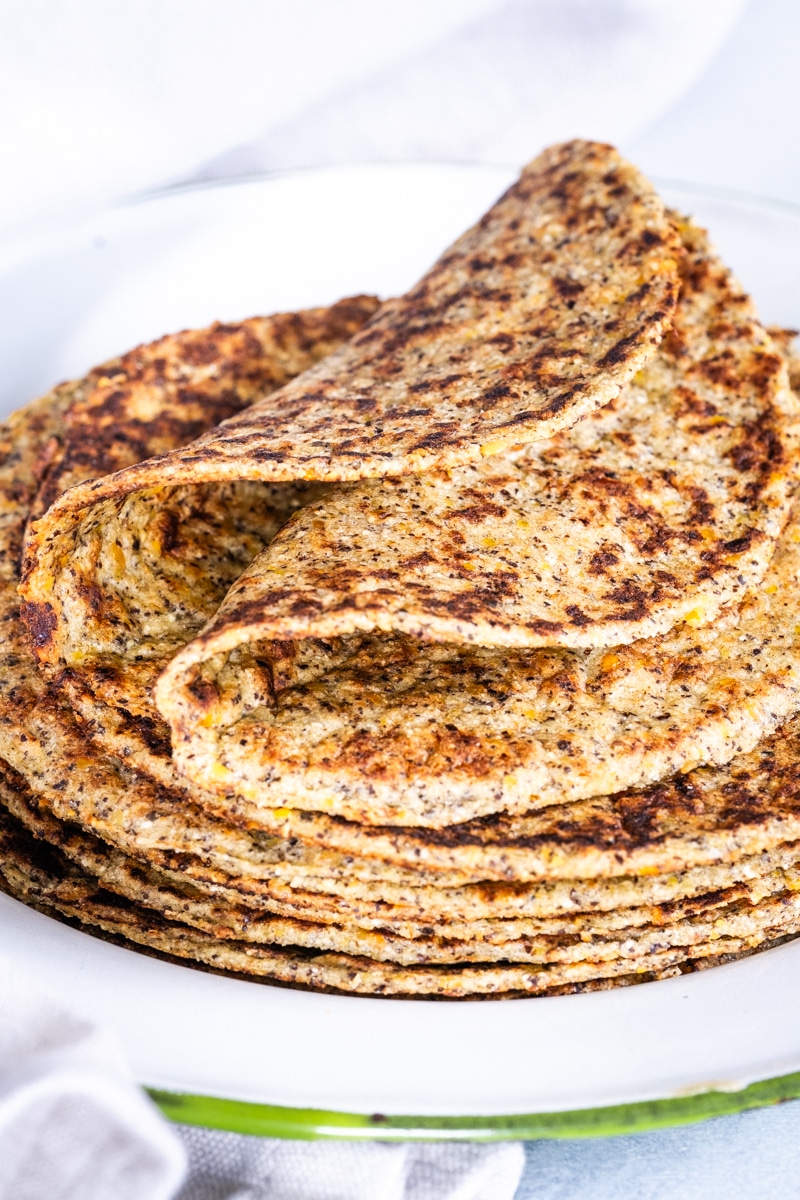
These low-carb coconut flour tortillas are soft, flexible, and sturdy, perfect for holding your favorite fillings without tearing. Crafted with coconut flour, and a handful of nutritious ingredients like golden flax seeds and hemp flour, these vegan tortillas are gluten-free, lectin-free, and have no gums added. And they are so easy to make, you have no excuse not to try them.
Reasons We Love These Coconut Flour Tortillas
Texture: These tortillas are soft and flexible, holding up to any filling. They have a slightly grainy surface, adding to their homemade appeal.
Taste: With a mild, nutty, and earthy flavor, they pair well with a wide range of ingredients, from taco meat and vegetables to eggs and even sweet fillings like homemade Nutella.
Size and thickness: The flexible dough is easy to roll out thin without breaking. If you have a tortilla press, you’ll find the process even simpler. They are made in a small size similar to those used for street tacos, but you can adjust them to your preference. Using a bowl to trim the edges and achieve a round shape is the method I used, but it is not necessary.
Sturdiness: Despite being low-carb and vegan, with no added gums, they are sturdy and won’t fall apart, even with heavy fillings.
Versatility: You can create them in any size you like. Additionally, they can be easily transformed into crispy tortilla chips or tostadas in just 10 minutes in the oven.
Tortillas That Add Nutritional Value to Your Meals
In our quest to create the perfect coconut flour tortilla recipe, we’ve carefully selected a blend of ingredients that not only enhances the flavor but also boosts the nutritional value.
At the heart of our recipe is coconut flour, known for its low carbohydrate content and high fiber, making it a fantastic option for those on gluten-free or keto diets. Its subtle sweetness pairs beautifully with the nutty and earthy notes of the golden flax seed and hemp flour, both of which contribute additional fiber, omega-3 fatty acids, and plant-based protein.
Tapioca flour, a light and airy starch, is included to provide a delicate texture and helps in binding the tortillas. The psyllium husk flakes, crucial for their binding properties, also add a dose of fiber without altering the flavor.
These tortillas allow us to enjoy our favorite tacos without extra carbs, gluten, lectins, or grains. With less than one gram of net carbs and a good amount of fiber per serving, they’re a satisfying, healthy choice and perfect for a keto diet. They are also dairy-free, egg-free, and grain-free.

Tools You Need
The most important tool for making these coconut flour tortillas is a good pan. You need a well-seasoned cast iron skillet or carbon steel pan. While a ceramic-coated pan should work, I haven’t tested it with this recipe.
To cook them, I use a crepe and tortilla carbon steel pan from De Buyer.
de Buyer cookware

If you have a tortilla press, the process will be smoother and faster, but I don’t have one, so I use a rolling pin and two sheets of parchment paper.
To shape them perfectly round, I use an approx. 4-inch diameter bowl and a pairing knife.
Later Edit: In the meantime, since I published this recipe, I got a tortilla press as a gift, and I use it all the time to make this recipe.


Ingredients to Make These Keto Tortillas
Yield: 8 whole tortillas plus 4 additional tortillas from trimmings (approx. 4 inches in diameter each)
- 1/4 cup coconut flour
- 1/4 cup tapioca flour
- 2 tablespoons golden flax seed (ground)
- 2 tablespoons psyllium husk flakes (whole), NOT psyllium husk powder
- 2 tablespoons hemp flour
- 1/4 teaspoon salt
- 2 tablespoons extra virgin olive oil (or avocado oil)
- 2/3 cup hot water
- 2 additional tablespoons of water
- Avocado oil for brushing the pan
Check out the nutrition label below the recipe card.

Note on flax seeds: I prefer golden flax seeds as they are milder in taste than the brown variety. I also prefer to grind the flax seeds just before use, but you can also get them already ground.
Note on psyllium husk: This recipe is made with whole psyllium, also called flakes. While powder could also work, quantities might need to be adjusted.
Note on hemp flour: Hemp flour is derived from whole ground hemp seeds, making it different from home-ground hemp hearts. It also varies from hemp protein powder, which undergoes processing to eliminate some fiber and increase protein concentration. While you can substitute hemp flour with either of these alternatives, slight adjustments to the liquid quantities may be required due to their unique characteristics.
Instructions to Make Coconut Flour Tortillas:
Here are the step-by-step instructions along with photos for making this recipe at home.
In a mixing bowl, combine the coconut flour, tapioca flour, ground golden flax seeds, whole psyllium husk flakes, hemp flour, and salt.
Gradually add in the olive oil (or avocado oil if preferred) and 2/3 cup of hot water. Begin to incorporate the ingredients with a spatula. Once the mixture starts to resemble dough, use your hands to mix until all ingredients are thoroughly combined.


Shape the mixture into a ball and allow it to rest for 5 minutes.

After resting, knead the dough once more, gradually adding the remaining 2 tablespoons of water. Your aim is to achieve a well-hydrated, elastic dough.
Divide the dough into 8 equal parts, shaping each piece into a ball. To prevent the dough from drying out, spray with water and cover with plastic wrap.
Begin forming the tortillas by rolling each dough ball between two sheets of parchment paper until they reach your desired thinness. For uniformly round tortillas, trim any uneven edges using a bowl as a guide. If available, a tortilla press can speed up this process.


Preheat a heavy-duty non-stick pan, such as a well-seasoned cast-iron or carbon steel tortilla pan, over medium heat. Lightly brush the surface with avocado oil.
Place the first tortilla in the pan. While it cooks, prepare the next tortilla. Each side should take about 1.5 to 2 minutes to cook, but this may vary depending on your heat source or the type of pan you’re using.
Transfer the cooked tortillas to a plate and cover with a towel to keep them warm and soft.

They are flexible and sturdy, making them perfect for any filling. Store them at room temperature, wrapped in a towel or paper and placed inside a plastic bag to maintain their softness.
To reheat, warm the tortillas briefly in the same pan or in the oven. Be careful not to overheat them, or they might become crispy, although this can be desirable if you plan to make tostadas or tortilla chips.
Note: While a ceramic-coated pan may work, this method hasn’t been tested with this recipe.

How to Serve These Low-Carb Coconut Flour Tortillas
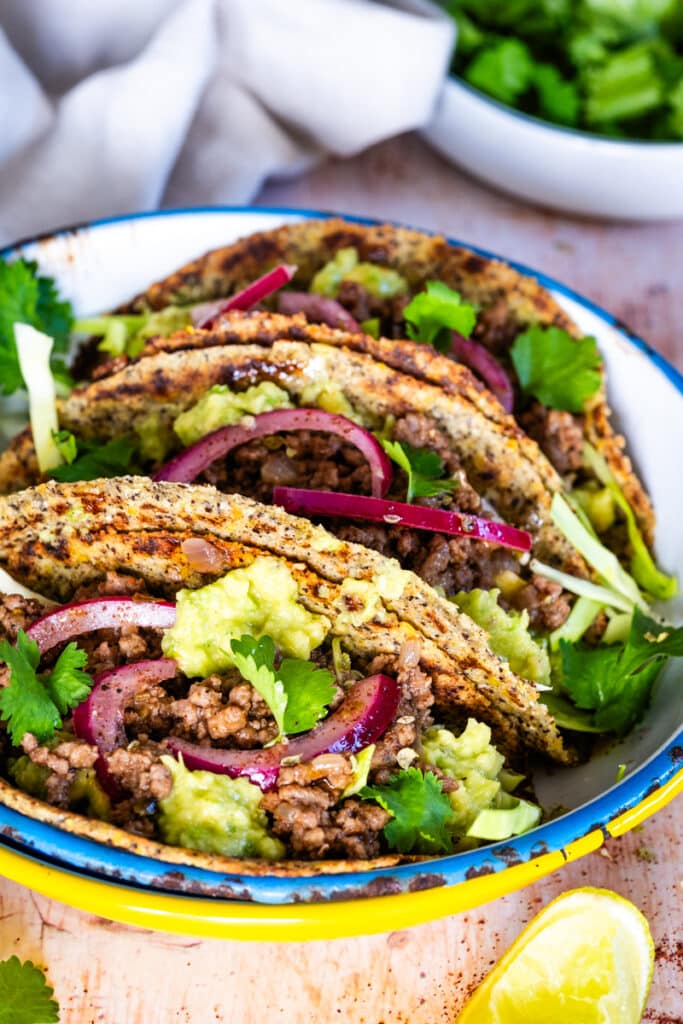
Create mouth-watering tacos by loading them with your favorite fillings, such as grilled or roasted vegetables, flavorful meats, seafood, or a simple yet delicious scramble of eggs. Serve them with our homemade ground beef taco meat.
The sturdy nature of these tortillas ensures they hold up well regardless of your chosen ingredients.
Transform them into crispy chips, perfect for your homemade salsa, guacamole, or these Gluten-Free Seafood Nachos. Cut the cooked tortillas into triangles, and bake for 10 minutes or until crispy at 350F.
Alternatively, bake them whole until crispy to transform them into tostadas, then pile them high with roasted vegetables, low-lectin beans, meats, and green sauces, for a satisfying and healthy meal. or make these delicious Shrimp Tostadas with Red Cabbage and Avocado.
For a sweet twist that is keto-friendly, spread our homemade sugar-free Nutella on these low-carb coconut flour tortillas.
The possibilities are endless with these adaptable, nutritious tortillas.

More Lectin-Free and Gluten-Free Tortillas
If carbs are not an issue for you, check out our delicious and easy-to-make cassava flour tortillas or gluten-free green tortillas.
This post contains affiliated links, which means I get a small commission if you choose to purchase something via one of my links, at no extra cost to you.
Print
Easy Coconut Flour Tortillas (Low-Carb, Vegan)
- Prep Time: 10 minutes
- Cook Time: 50 minutes
- Total Time: 1 hour
- Yield: 4
Description
These low-carb coconut flour tortillas are soft, flexible, and sturdy, perfect for holding your favorite fillings without tearing. Crafted with coconut flour, and a handful of nutritious ingredients like golden flax seeds and hemp flour, these vegan tortillas are gluten-free, lectin-free, and have no gums added. And they are so easy to make, you have no excuse not to try them.
Ingredients
- 1/4 cup coconut flour
- 1/4 cup tapioca flour
- 2 tablespoons golden flax seed (ground)
- 2 tablespoons psyllium husk flakes (whole)
- 2 tablespoons hemp flour
- 1/4 teaspoon salt
- 2 tablespoons extra virgin olive oil (or avocado oil)
- 2/3 cup hot water + 2 tablespoons
- avocado oil for brushing the pan
Instructions
- In a large bowl, combine the coconut flour, tapioca flour, ground golden flax seed, whole psyllium husk flakes, hemp flour, and salt.
- Gradually add in the olive oil (or avocado oil if preferred) and 2/3 cup of hot water. Begin to incorporate the ingredients with a spatula. Once the mixture starts to resemble dough, use your hands to mix until all ingredients are thoroughly combined.
- Shape the mixture into a ball and allow it to rest for 5 minutes.
- After resting, knead the dough once more, gradually adding the remaining 2 tablespoons of water. Your aim is to achieve a well-hydrated, elastic dough.
- Divide the dough into 8 equal parts, shaping each piece into a ball. To prevent the dough from drying out, spray with water and cover with plastic wrap.
- Begin forming the tortillas by rolling each dough ball between two sheets of parchment paper until they reach your desired thinness. For uniformly round tortillas, trim any uneven edges using a bowl as a guide. If available, a tortilla press can speed up this process.
- Preheat a heavy-duty non-stick pan, such as a well-seasoned cast-iron or carbon steel tortilla pan, over medium heat. Lightly brush the surface with avocado oil.
- Place the first tortilla in the pan. While it cooks, prepare the next tortilla. Each side should take about 1.5 to 2 minutes to cook, but this may vary depending on your heat source or the type of pan you’re using.
- Transfer the cooked tortillas to a plate and cover with a towel to keep them warm and soft.
- These tortillas are flexible and sturdy, making them perfect for any filling. Store them at room temperature, wrapped in a towel or paper and placed inside a plastic bag to maintain their softness.
- To reheat, warm the tortillas briefly in the same pan or in the oven. Be careful not to overheat them, or they might become crispy, although this can be desirable if you plan to make tostadas or tortilla chips.
Notes
Note: While a ceramic coated pan may work, this method hasn’t been tested with this recipe.
Yield: 8 whole tortillas plus 4 additional tortillas from trimmings (approx. 4 inches in diameter each)
Substitutions: The coconut flour, tapioca and one tablespoon of each flax seeds and psyllium husks are necessary for this recipe, but you can skip the hemp flour if you don’t have any. We use it to improve the nutritional value of these tortillas. You can adjust the water content to fit any changes you do in dry ingredients.
18 Comments
Natalia
March 6, 2026 at 3:17 pmHi Claudia! I made these today with my own hemp seed flour from hulled hemp seeds. After adding the 2/3 cup water and letting the dough rest for at least 10. Minutes the dough was still really wet. I decided not to add the additional 2 TBSP if water and add an additional 1 TBSP of the coconut flour and 1TBSP of tapioca starch. The dough was significantly drier. I made 12 small balls and light rolled each ball in tapioca starch and pressed them with a cast iron pan between parchment paper. I bake all of them for 20 minutes until crispy. They taste great and work well as tostadas and dipped in whatever.
I’ll be making them again and might try pumpkin seed flour instead of hemp flour.
Thanks for the testing and great recipe.
Claudia
March 7, 2026 at 8:30 amHi Natalia! I’m glad you got something you enjoyed in the end. There could be a few reasons for what happened, but the first one that comes to mind is the pshyllium husk – sometimes it can be old, or a different quality, and doesn’t absorb so much water as it should. Flaxmeal is also essential, so I hope you used both. Then, please note that hemp flour is not the same thing as ground hemp hearts. Hemp flour is made of whole hemp seeds. That being said, this is a forgiving recipe. So next time, if it needs a little more flour, add bit by bit, until you get the right consistency. Or, if too dry, add a bit more water. The result should be a flexible, soft tortilla. I hope next time they will be a success. I’m sure you will love them. xx -Claudia
Natalia
March 7, 2026 at 10:35 amYes. I used flax and psyllium husks. It was a new bag os husks and has worked great in recent GF bread recipes. I understand the ground hemp seeds and hemp flour aren’t the same as read in the post. I know GF anything requires significant testing to make it palatable and reliable. I added more flour as needed to make it happen. The fewi made in a skillet were soft and pliable, but i prefer crunchy anything when I eat. That’s the reason for smoothie bowls i. Instead smoothies. The toppings are the best bit about it!!nd I know
I am thankful to the creators that take the time to test and create amazing (some not so much)n and then share them with the diet intolerant in the world.
🙏
Claudia
March 7, 2026 at 11:41 amAnd I’m grateful to you and other readers who take the time to comment and review, we really appreciate it! ❤️ -Claudia
Natalia
February 23, 2026 at 7:57 pmCould I use melted coconut oil and black sesame powder instead of hemp flour?
Claudia
February 24, 2026 at 3:04 amHi Natalia! I have no idea. You won’t get the same texture, taste, nutrition, or even color :). Too many variables for me to guess if you would like the final result. -Claudia