
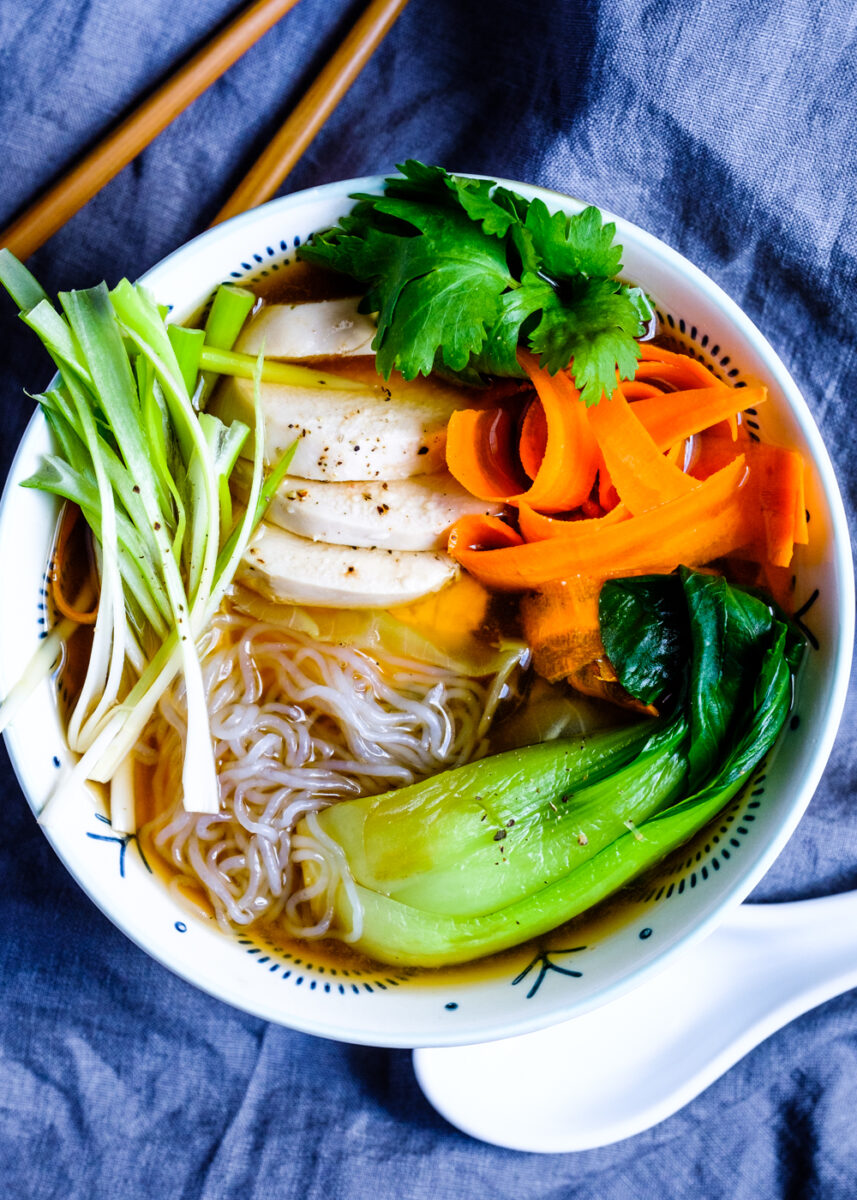
This gluten-free miso ramen with shirataki noodles is warm, savory, and satisfying, yet much lighter than traditional ramen. Made with chicken, vegetables, miso, and virtually carb-free shirataki noodles, it’s a nutritious, low-carb, high-protein meal that comes together quickly once the basic ingredients are prepared.
Miso ramen used to be one of my favorite dishes to order at Japanese restaurants. When I started following the Plant Paradox program, restaurant ramen no longer worked for me, so I created a homemade version using simple ingredients I could carefully choose.
The result is less complicated than traditional ramen but still delivers that comforting combination of a flavorful broth, tender chicken, noodles, crisp vegetables, and umami-rich miso.
A lighter, low-carb ramen bowl
Traditional ramen is usually made with wheat noodles, which means it isn’t gluten-free and can be quite high in carbohydrates. In this version, shirataki noodles take their place.
Also called konjac noodles, shirataki noodles contain very few digestible carbohydrates and have a neutral flavor that absorbs the broth and seasonings around them. Their texture is different from wheat ramen noodles, but they work especially well in soups.
Chicken makes this bowl satisfying and high in protein, while cabbage, bok choy, carrots, scallions, and cilantro add color, texture, and plenty of vegetables. It’s a complete meal in one bowl without feeling heavy.
What you’ll need
This soup is mostly an assembly project, so it comes together quickly if you have cooked chicken and stock ready.
Chicken or vegetable stock: A flavorful stock forms the base of the soup, so use homemade stock or the best clean-ingredient version you can find.
Cooked chicken: Roasted or pan-cooked chicken breast works well. I often cook extra chicken to keep on hand for quick soups, salads, and bowls like this one.
Miso paste: Choose a good-quality Japanese miso with a simple ingredient list. If you need the recipe to be strictly gluten-free, check the label carefully because some miso pastes contain barley or other gluten-containing grains. Miso made from soybeans or rice can be gluten-free, but this shouldn’t be assumed.
Shirataki noodles: I use Miracle Noodle Capellini (also called angel hair), but another shirataki noodle suitable for soup will also work. Prepare it according to the package instructions before adding it to your serving bowls.
Fresh vegetables and herbs: Green cabbage and bok choy cook briefly in the broth, while carrot ribbons, scallions, and cilantro are added at the end for freshness and texture.
How to make miso ramen with shirataki noodles
Begin by preparing the shirataki noodles according to the package instructions. These noodles often need to be thoroughly rinsed before being heated or added to a dish.
While the noodles are being prepared, warm the stock in a soup pot. Add the shredded cabbage and cook it for about seven minutes. Add the bok choy and sliced cooked chicken, then simmer for another three to four minutes, just until everything is heated through and the vegetables are tender.
Turn off the heat before stirring in the miso paste. Miso is a fermented food, and adding it after the pot is removed from the heat also helps preserve its nuanced flavor. Taste the broth and add a little more miso if you prefer a stronger, saltier soup.
Divide the noodles between two bowls, ladle the soup, chicken, and vegetables over them, and finish with carrot ribbons, scallions, and fresh cilantro.
Adding shiitake mushrooms
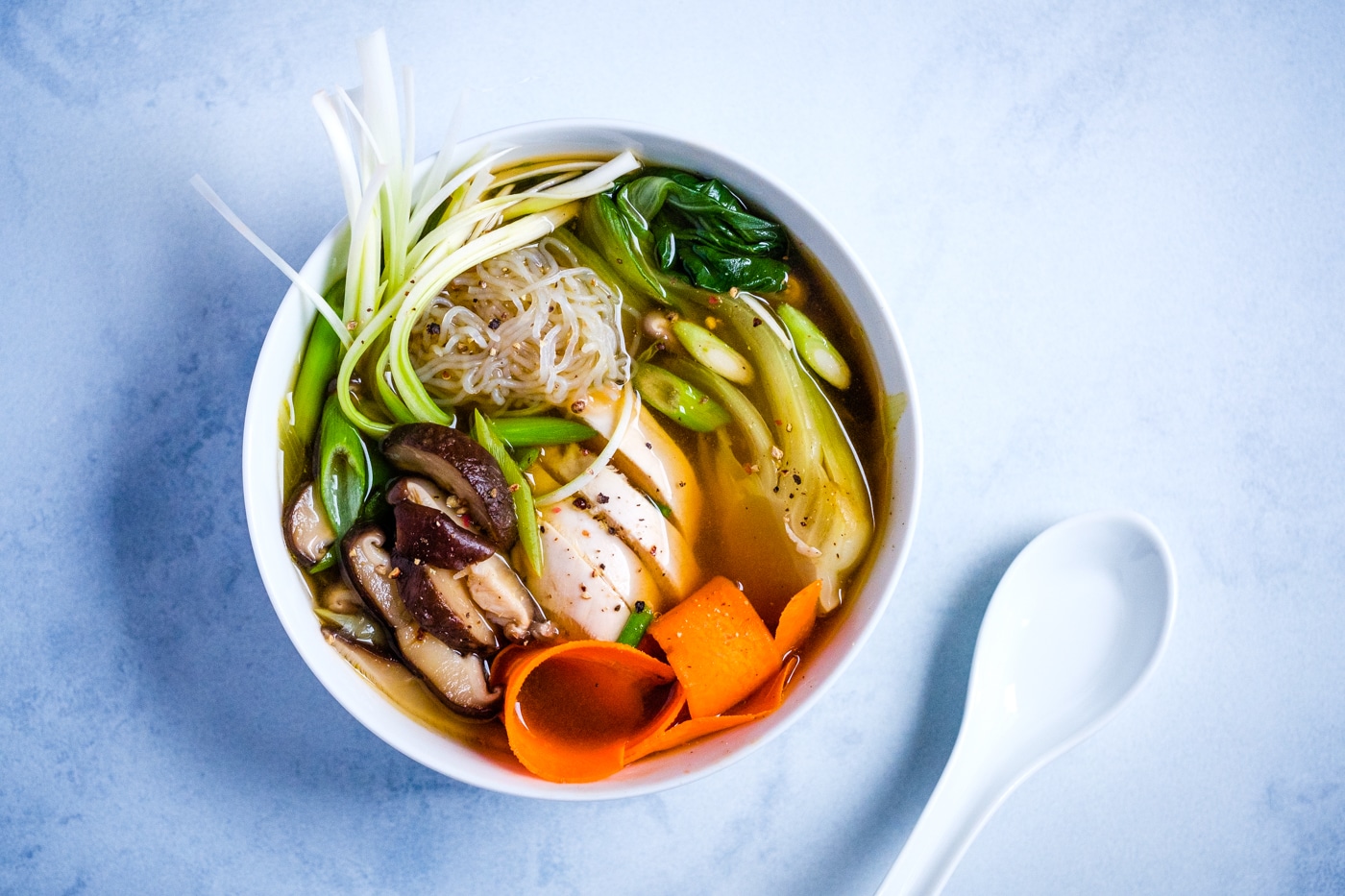
Shiitake mushrooms are a flavorful addition and work beautifully with miso broth. Slice them and cook them in the stock with the cabbage until tender.
For a vegetarian variation, use vegetable stock, omit the chicken, and add a generous amount of shiitake mushrooms. Keep in mind that without the chicken, the soup will contain considerably less protein, so you may want to serve it with another protein source.
Is this recipe Plant Paradox compliant?
This was originally created as a Plant Paradox-compliant and lectin-free alternative to restaurant ramen. Shirataki noodles are made from konjac rather than wheat, and traditionally fermented miso can fit within this approach. As always, check the labels of the stock, miso paste, and noodles, since ingredients can vary between brands.
Enjoy!
You may also like
If you enjoy Japanese-inspired food that is also gluten-free, you can try this Low-Carb Sushi Rolls with Cauliflower Rice, or this Multi-Purpose Miso Glaze.
More recipes with Shirataki pasta
Looking for more recipes with Shirataki pasta? Check out our collection here.
- Low-Carb Shirataki Noodle Stir-Fry with Shrimp
- Low-Carb Shirataki Pasta and Vegetable Casserole
- Low-Carb Shirataki Mac and Cheese
- Chocolate Shirataki Noodle Pudding
*This post contains affiliate links, which means I get a small commission if you choose to purchase something via one of my links, at no extra cost to you.
Print
Gluten-Free Miso Ramen with Shirataki Noodles
- Prep Time: 15 minutes
- Cook Time: 15 minutes
- Total Time: 30 minutes
- Yield: 2
- Category: Soup
- Method: Boiling
- Cuisine: Japanese
- Diet: Gluten-Free
Description
A comforting gluten-free miso ramen made with shirataki noodles, sliced chicken, bok choy, cabbage, and fresh vegetables. It’s a nutritious, low-carb, high-protein meal for two that comes together quickly with prepared stock and cooked chicken.
Ingredients
- 28 ounces (830 milliliters) chicken stock or vegetable stock
- 1 bag Miracle Noodle Capellini, prepared according to the package instructions
- 2 tablespoons miso paste, or more to taste
- About 6 ounces (170 grams) cooked chicken breast, sliced
- 1 cup shredded green cabbage
- 2 small bok choy, halved
- Handful of fresh cilantro
- 1 small raw carrot, peeled into ribbons
- A few scallions, sliced
- Salt and freshly ground black pepper, if needed
- Optional: shiitake mushrooms, thinly sliced, or dry and rehydrated
Instructions
- Prepare the shirataki noodles according to the package instructions. Divide the prepared noodles between two serving bowls.
- Warm the stock in a soup pot. Add the shredded cabbage and gently boil for about 7 minutes.
- Add the bok choy and sliced cooked chicken. Simmer for 3 to 4 minutes, until the chicken is heated through and the vegetables are tender.
- Turn off the heat. Add the miso paste and stir until completely dissolved. Taste and add more miso, salt, or pepper if needed.
- Divide the soup, chicken, cabbage, and bok choy between the two bowls. Top with the carrot ribbons, scallions, and fresh cilantro, and serve immediately.
Notes
Check that your miso paste is labeled gluten-free, as some varieties are made with barley.
Prepare the shirataki noodles according to the instructions for your specific brand; most need to be thoroughly rinsed.
For additional flavor, add sliced shiitake mushrooms to the pot with the cabbage.
For a vegetarian version, use vegetable stock, omit the chicken, and add extra shiitake mushrooms.
9 Comments
Nicky Brown
September 20, 2021 at 8:25 amHi,
I’m about to start phase 1.can I have miso alone in phase 1? Or only after the 30 days
Claudia
September 21, 2021 at 7:15 amHi Nicky, phase one is only 3 days, after those 3 days you can have miso if you feel good eating it. I guess you are doing the 30 days quick and easy, where phase 1 is longer. No miso in Phase 1, anyway.
Karen
January 25, 2021 at 6:21 pmYum, made this last night, great way to use up leftover chicken and husband who is not lectin free liked it too! I used spaghetti Shirataki noodles and they are better than normal ramen noodles! Thank you for posting this, gave me 1 more main meal for my non-compliant spouse to enjoy with me!
Claudia
January 26, 2021 at 3:23 amHi Karen, so happy you loved it. I understand how you feel about nailing another meal that your non-compliant family members will eat too :))). Hugs, Claudia
Christine
November 28, 2018 at 4:19 amThank you for the tip about adding Miso paste at the end. I will be making this recipe on the weekend.
Claudia
November 28, 2018 at 3:56 pmMy pleasure <3
Dee
October 27, 2018 at 1:39 pmI love your blog and your recipes. I’m making Carnitas Bowl. Can I use Salsa Verde in the Plant Paradox eating plan? If not, what could I use as a Salsa?
Cris
October 14, 2018 at 7:41 pmFYI miso is not lectin-free. It’s made of soy. So, this is basically lectin soup with shirataki noodles! 🙂
Claudia
October 15, 2018 at 9:44 pmHi Cris, Miso is fermented soy and is Plant Paradox compliant. Page 201, The Plant Paradox Book, The YES List, under HERBS and Seasonings, Miso is listed second. I have been doing this for 1.5 years and read the book countless times, and when I’m in doubt I ask Dr. Gundry directly. I would never post something as compliant if I was not sure it was.